Retail CV Examples
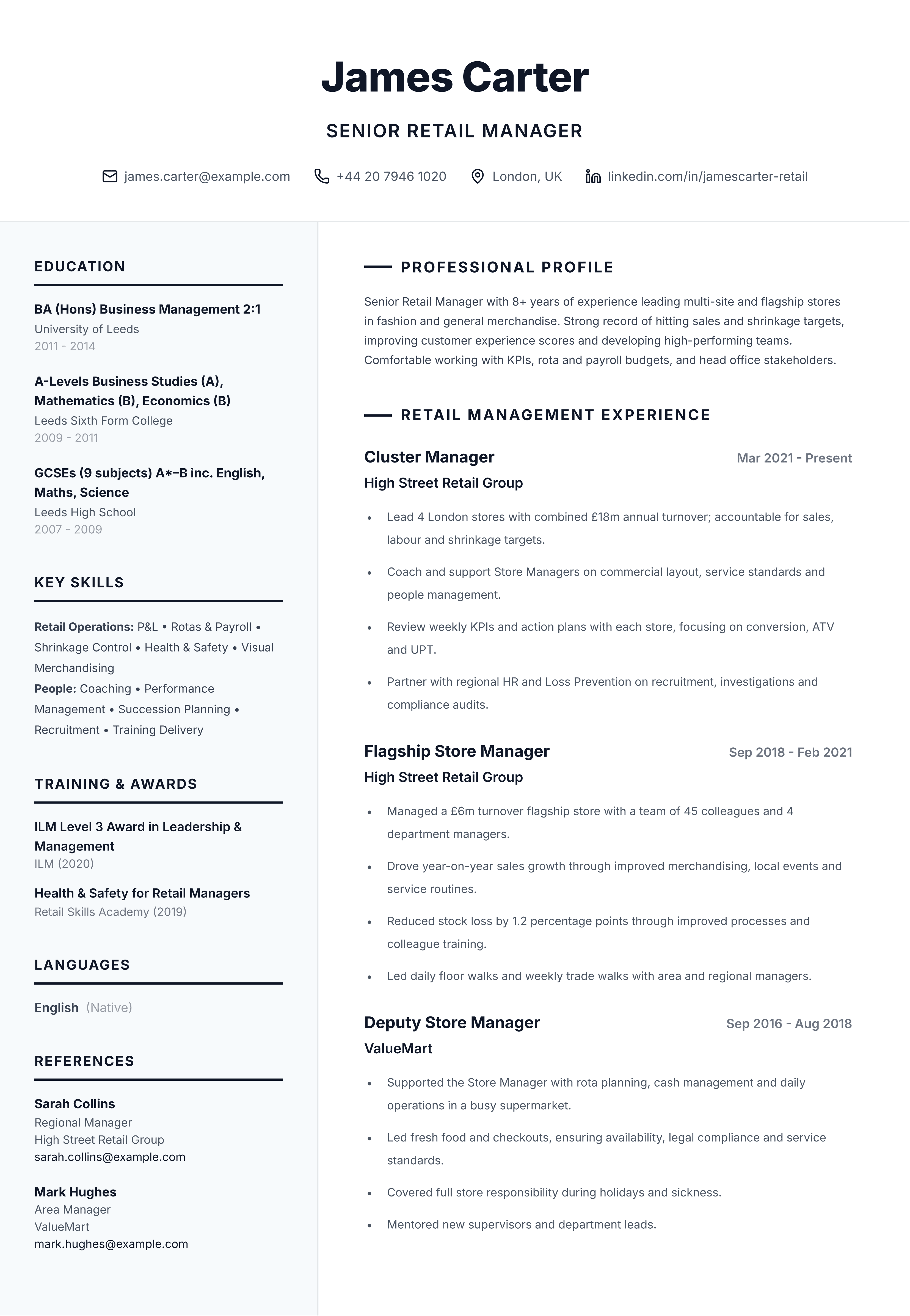
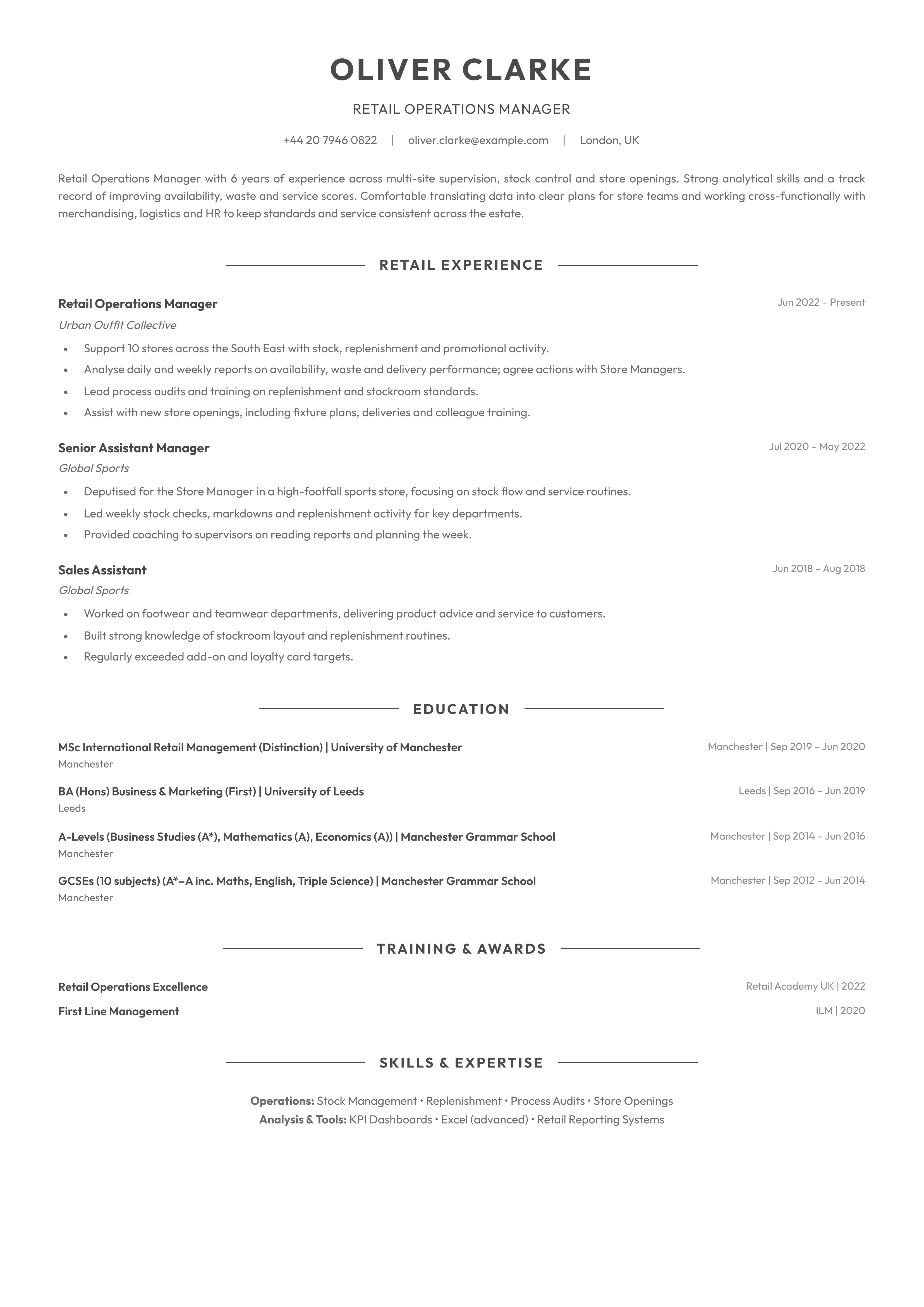
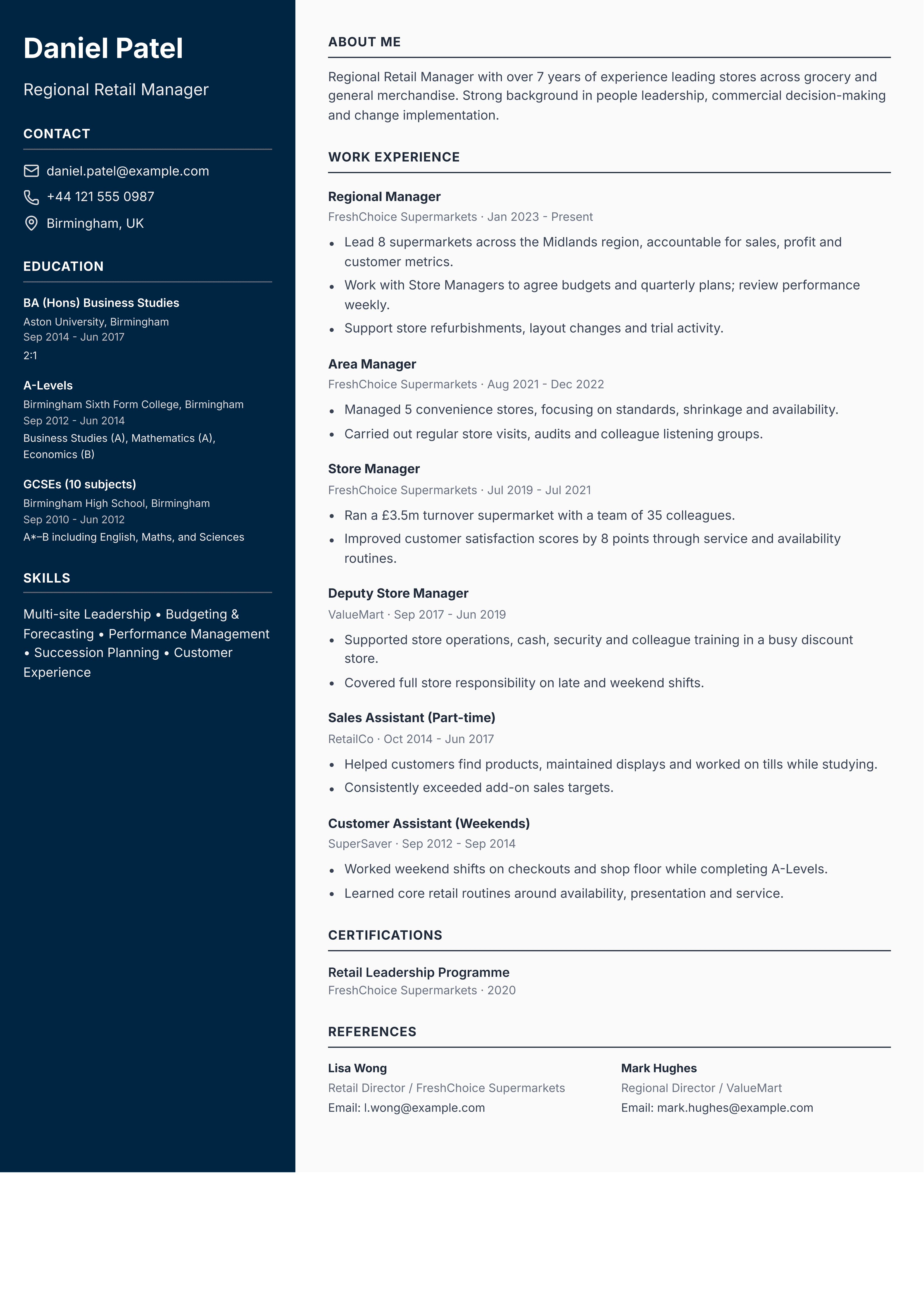
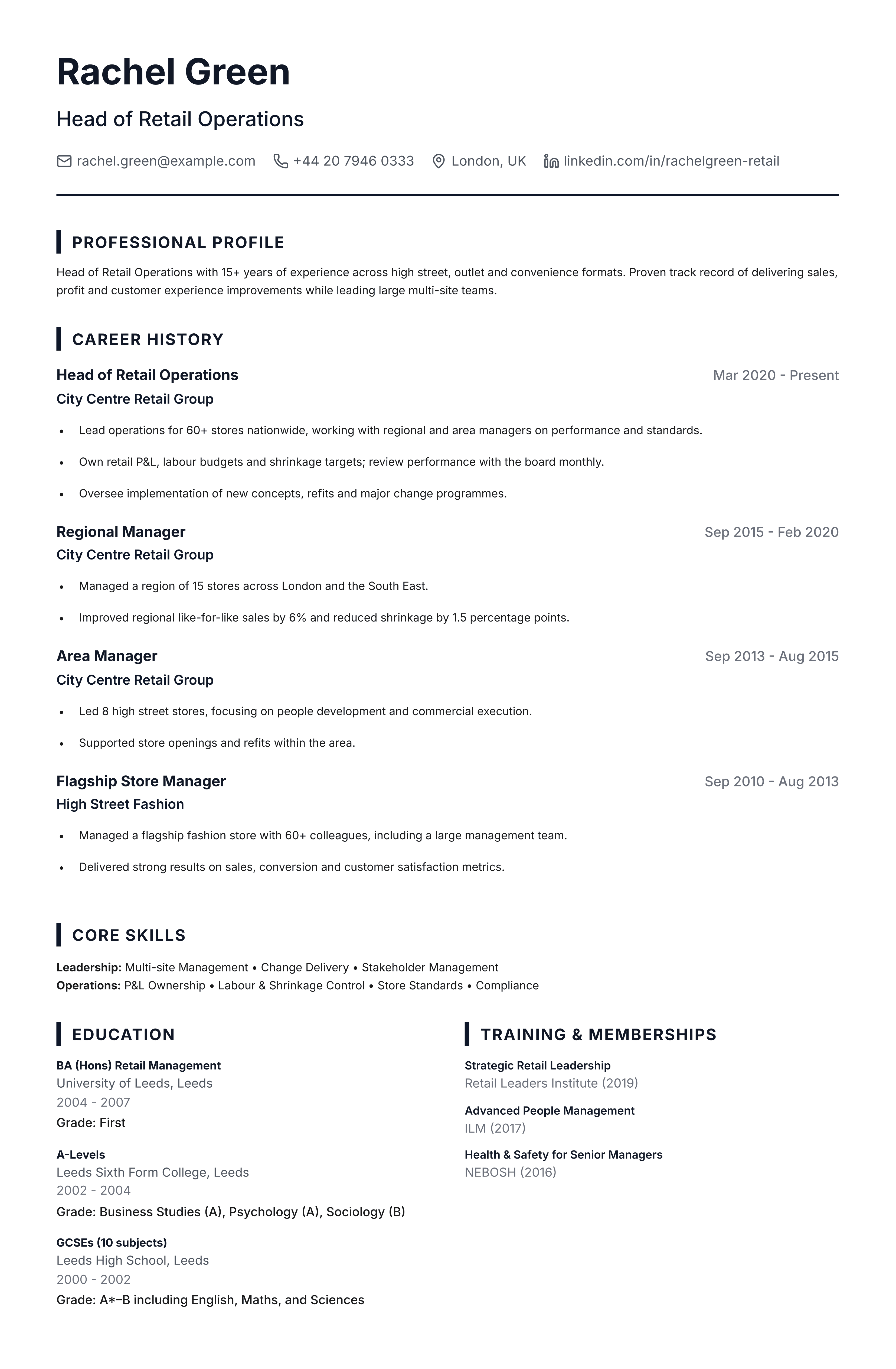
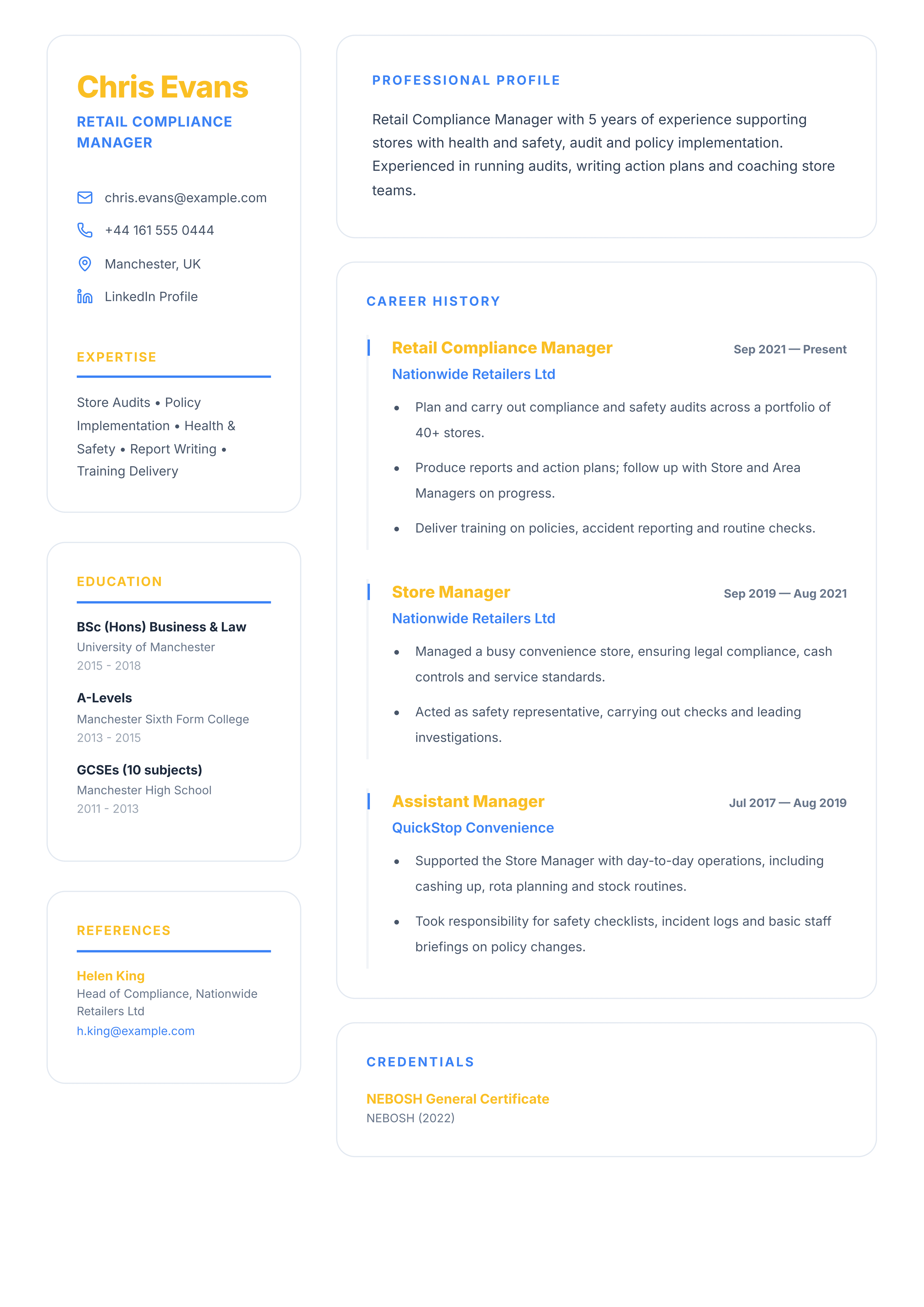
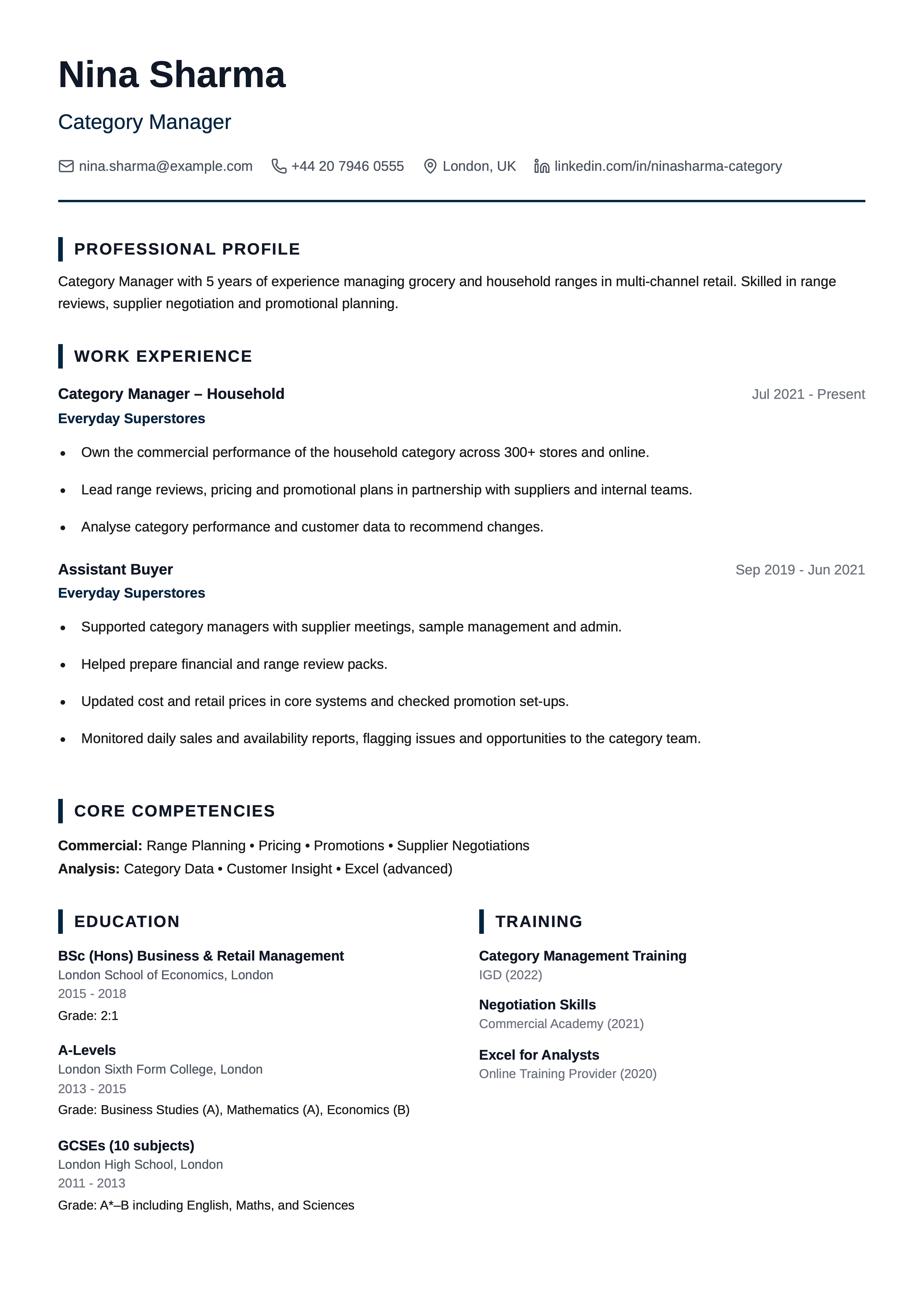
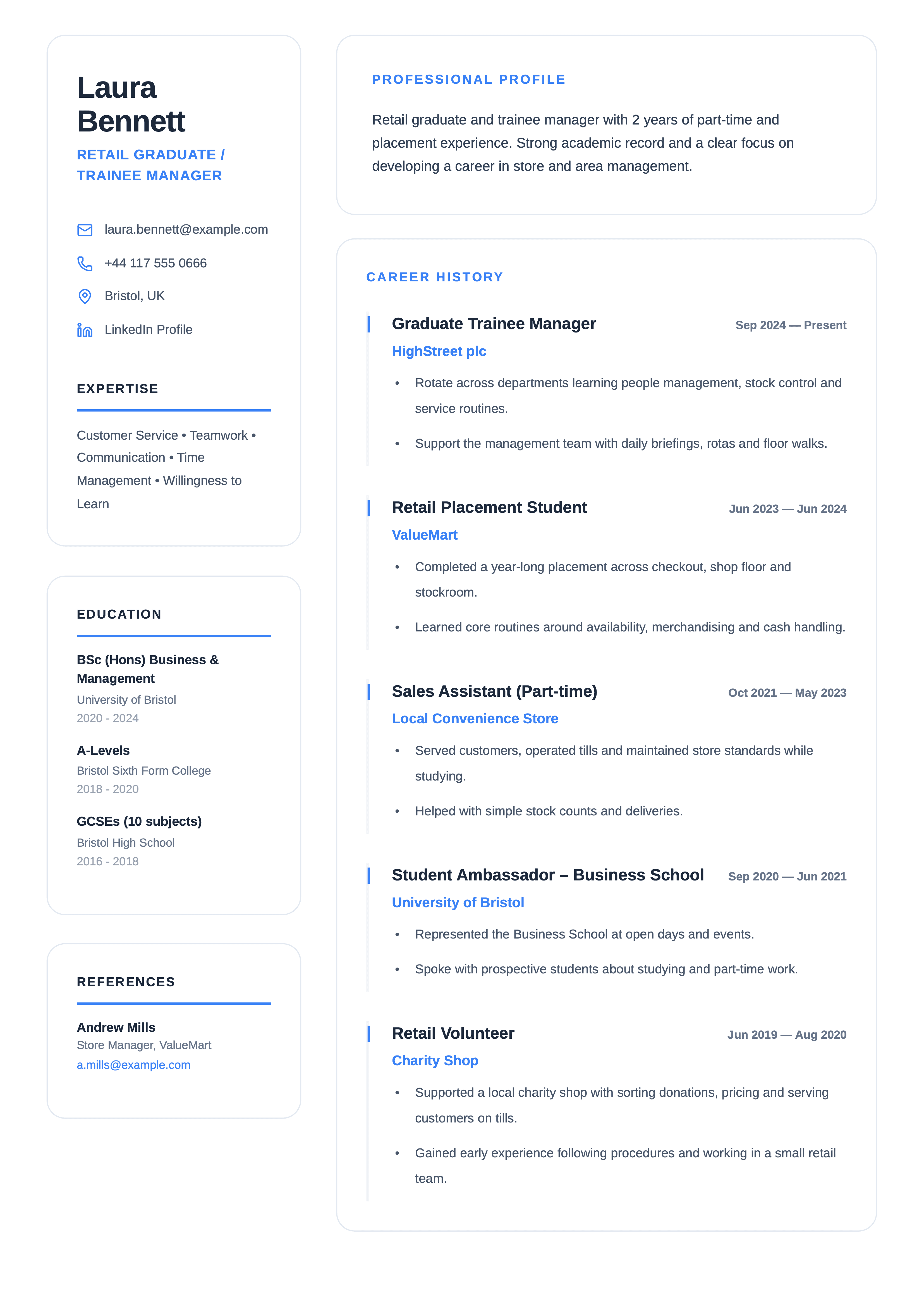
Take a look at the examples below and we will then break it down section by section.


How to Structure a Retail CV
A strong retail CV leads with commercial outcomes: sales, conversion, shrink, service scores and team performance. Hiring managers skim for level (assistant vs supervisor vs manager), setting (flagship, supermarket, ecommerce) and tenure.
Structure your CV so your most recent role, store size or turnover context, and people responsibility are easy to find.
What recruiters scan first
Typically: contact details and title, professional summary, current or most recent role, then skills (POS, VM, people management) and education. If those sections match the job description, you are more likely to get a full read.
A structure that works:
- Name and target role (e.g. Store Manager, Retail Supervisor)
- Professional summary tailored to the role (keep it short; see below)
- Core skills (sales, service, stock, compliance, leadership)
- Work experience in reverse date order, most recent first
- Education and relevant training (apprenticeships, NVQs, internal programmes)
- Optional: projects (refits, launches); interests only if credible
Format and length
Aim for one or two pages for most retail roles; senior multi-site leaders may need two. Use clear headings, bullet achievements with metrics, and a simple font. Lead with facts employers search for (KPIs, footfall, mystery shop, health and safety).
Reverse chronological vs skills-first
Most candidates should use reverse chronological work history. A skills-first layout can work for career changers or first jobs with varied part-time experience, as long as you still evidence outcomes.
Keep formatting sharp (dates, headings and bullet style) and proofread before applying. In retail, presentation quality is read as a proxy for floor standards and attention to detail.
Contact Details
Put your full name, professional email and phone number at the top. A clear job title line (for example "Assistant Store Manager" or "Retail Supervisor") helps recruiters immediately see fit.
Town or city is enough for location; you do not need your full address at application stage.
What to include
- Full name and how you want to be addressed professionally
- Professional email address
- Mobile number
- Town or city (optional)
- LinkedIn URL (optional)
What to leave out
- Full home address
- Date of birth
- Marital status
- NI number on the CV (unless specifically requested)
Professional Summary
Use this section to state your years in retail, level (team member to area manager), and setting (fashion, grocery, omnichannel). Tie in phrases from the job advert where they are accurate: for example KPIs, shrink, VM or people development.
Keep it factual and specific, and roughly within about four to six lines (many guides suggest under 100 words). Generic lines like "passionate about customers" waste space that could mention targets or team size instead.
In the examples below, the highlights follow the same idea each time: level and setting (role, sector, scale), commercial and operational focus (sales, stock, compliance), and results (growth, scores, awards).
Store manager with 8+ years in high-street fashion and P&L ownership. Strong in weekly trading reviews, rota and payroll efficiency and year-on-year like-for-like growth in two consecutive roles.
Retail supervisor with 4 years in large-format grocery. Experienced in shift handovers, cash and banking controls and coaching a team of 15 on service standards.
Enthusiastic sales assistant with 2 years weekend and seasonal experience. Comfortable with tills and refunds, stock replenishment and upselling on targeted promotions.
Skills
Match skills to the level: shop-floor roles need service and till competence; management roles need P&L, people processes and compliance. Split customer-facing strengths from back-of-house if it helps readability.
Aim for a tight mix of hard skills (EPOS, stock systems, VM) and professional skills (coaching, conflict handling). Around 8 to 14 well-chosen lines often works well.
Only list what you can discuss at interview.
Professional Experience
List roles in reverse chronological order with employer, job title and dates. Use bullets for responsibilities and outcomes; numbers beat adjectives.
A clear structure for each role
For each job, recruiters often read in three passes. A layout that matches that helps:
- Context: brand, store format, turnover or footfall context if you can share it
- Responsibilities: sales, service, stock, people, compliance
- Achievements: KPI movement, awards, projects, cost savings
How to write strong experience bullets
Good pattern: what you did + scope + measurable outcome. For example: "Drove attachment sales of care plans to 18% of transactions, 6 points above district average."
Start bullets with results-first verbs (for example "increased," "converted," or "merchandised") to make trading impact faster to scan.
Useful details include team size, turnover band, and systems (Workforce, Reflexis, etc.) where relevant.
- Percentage or currency improvement where honest
- Service or compliance scores
- Shrink, waste or availability wins
- People: hiring, retention, training outcomes
Reduced stock loss by 1.2% through tighter cycle counts and till variance coaching, contributing to an "excellent" audit outcome two years running.
Worked on the shop floor and helped customers.
Education & Qualifications
Include your school or college qualifications, retail apprenticeships, and relevant certificates (food hygiene, first aid, internal management programmes).
For GCSEs or equivalent, a single summary line is usually enough unless the employer asks for detail.
What to include based on your path
First-job applicants should foreground availability, reliability and any sales or service experience. Managers should show progression and any multi-site or project exposure.
Retail Team Leader Apprenticeship, Level 3
Completed 2023
GCSEs including English and Maths
2018
In-house training
Conflict resolution, manual handling, fire warden (examples as relevant)
Projects & Additional Information
Use this for store openings, refits, range resets, or omnichannel pilots—work that does not sit neatly under one job title.
Optional: charity fundraising drives led in store, or languages if relevant to the customer base.
Career achievements and awards
Short listings work well: "Store of the Quarter", regional sales competitions, or recognition for service. Pair each with a date or metric.
Make sure your CV passes ATS checks
Many employers screen CVs electronically before a human reads them. To improve your chances:
- Use standard section headings recruiters expect
- Mirror key terms from the job description where truthful
- Keep layout text-led and clearly sectioned so ATS tools can parse KPIs, systems and role progression reliably
- Avoid tables and text boxes that parsers struggle with
- Export to PDF only if the employer allows it; otherwise use Word if asked
- Keep layout simple and legible
Before you send: align the wording with the advert, proofread numbers and brand names, and mention notice period only if asked.
References
It is normal to write "available on request" unless the advert asks for referees up front. A store or area manager who has managed your performance is usually strongest.
What to include for each referee
- - Full name and title
- - Employer and store or region
- - Work email and/or phone
- - Relationship (e.g. line manager)
Ready for your next retail role?
Choose a retail template and start editing.
Browse Retail CV Templates