
Nurse CV Examples
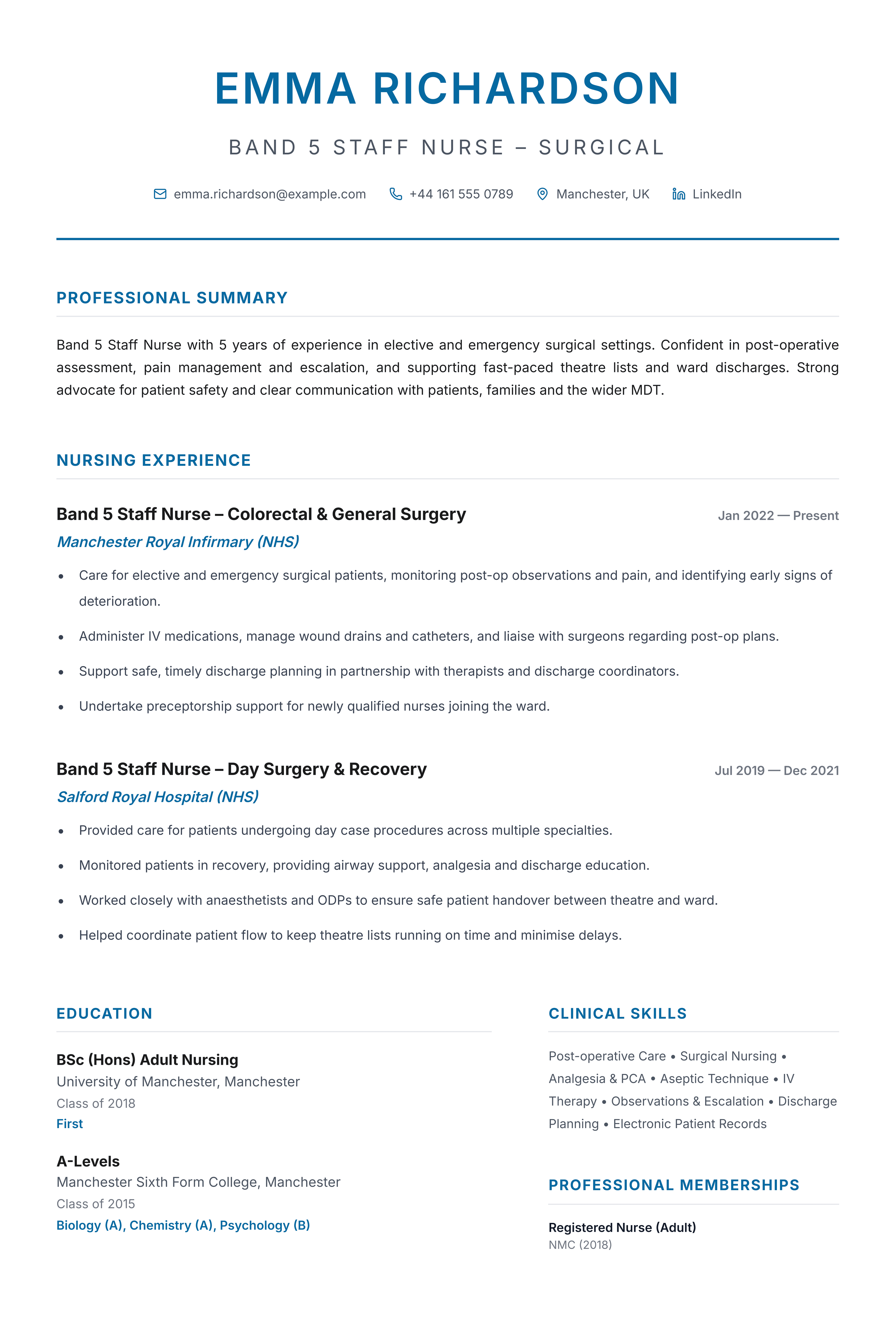
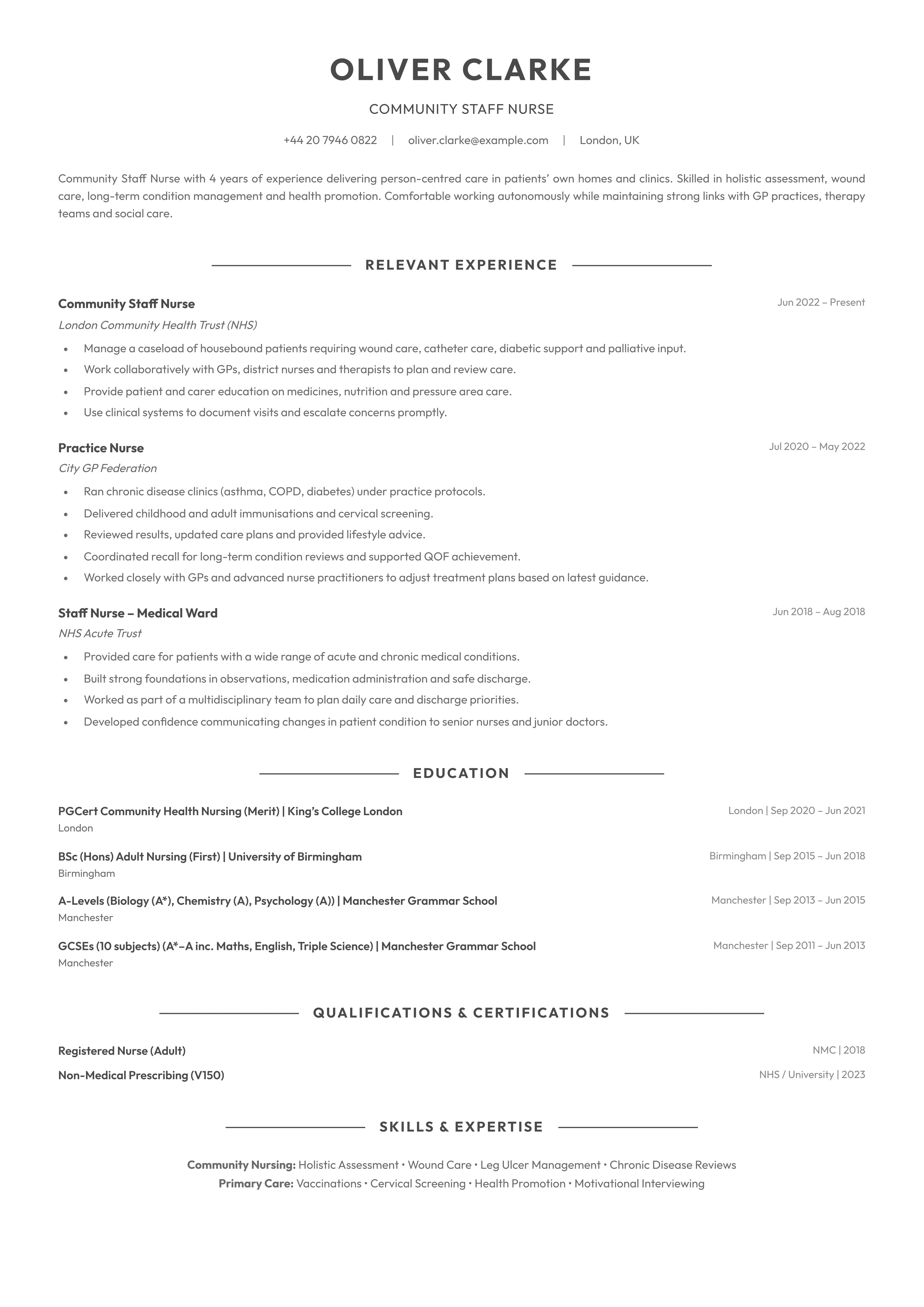
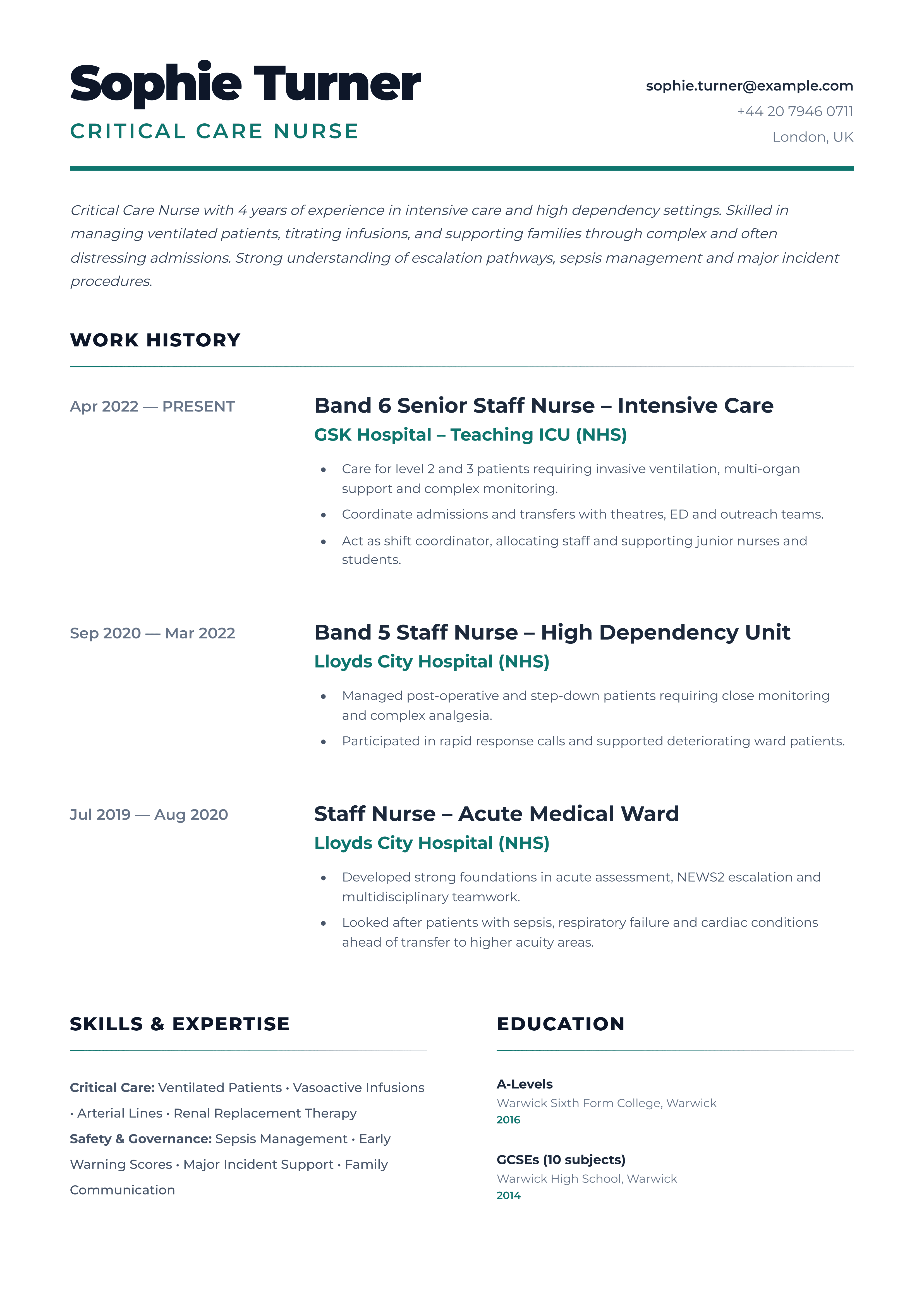
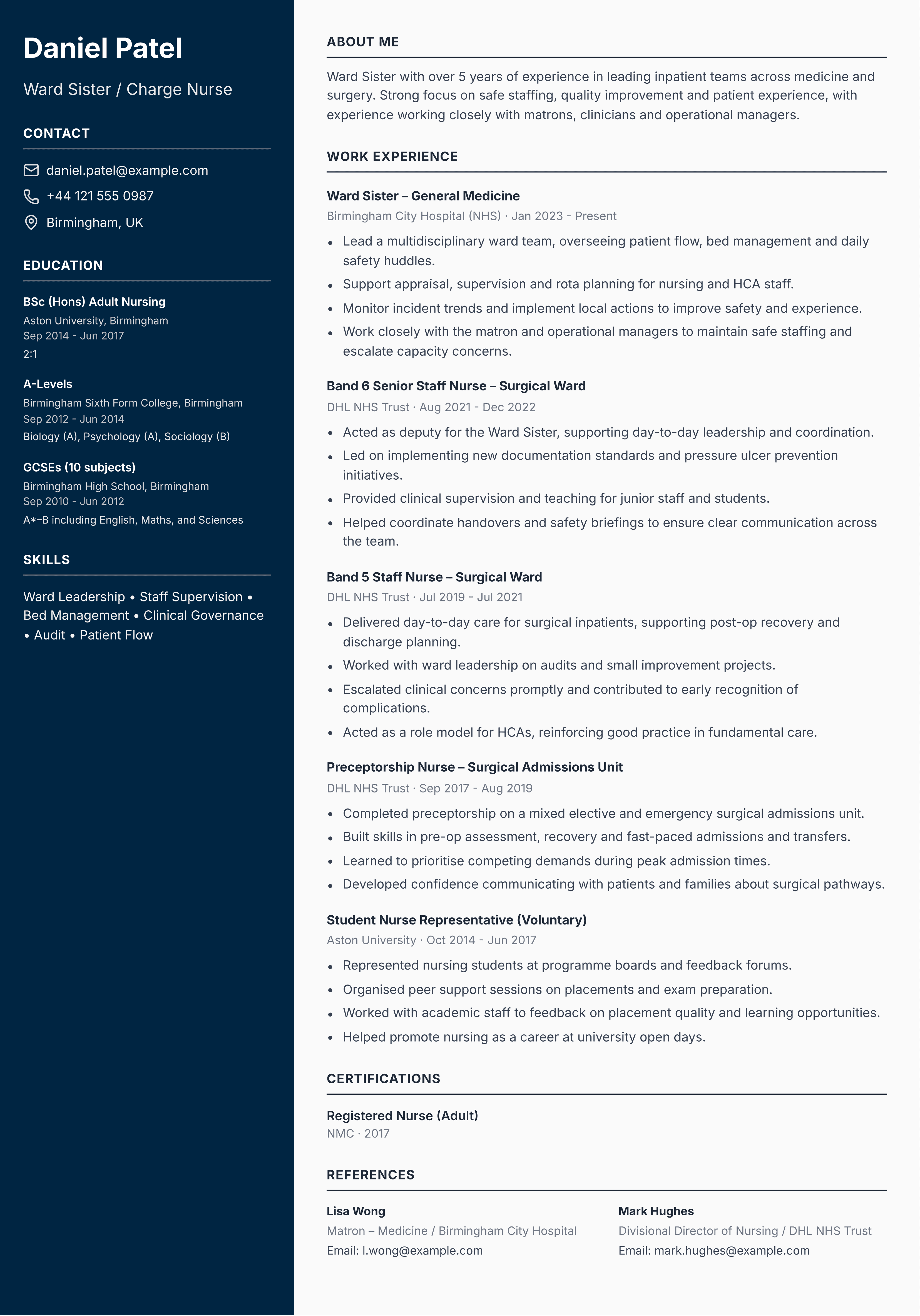
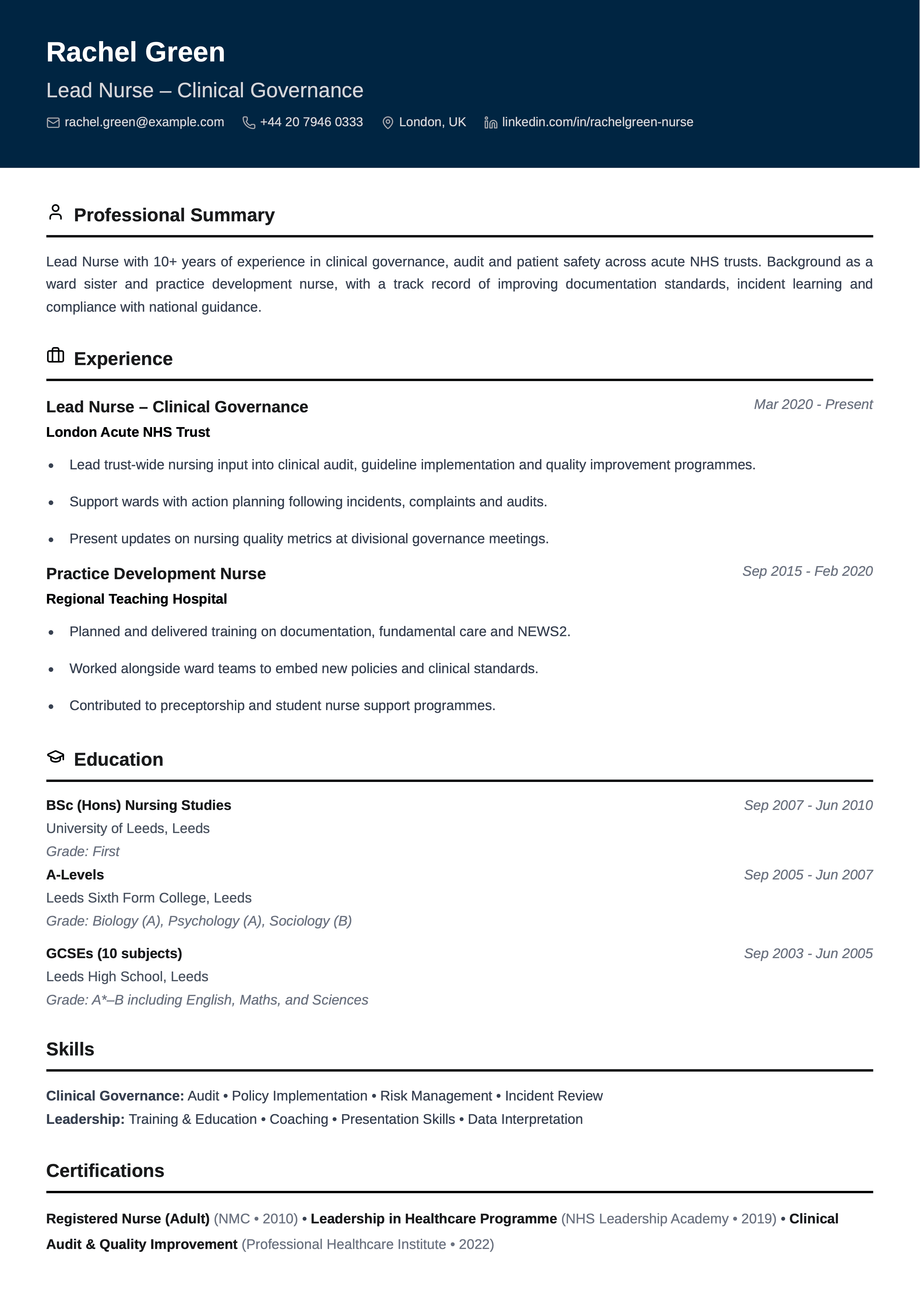
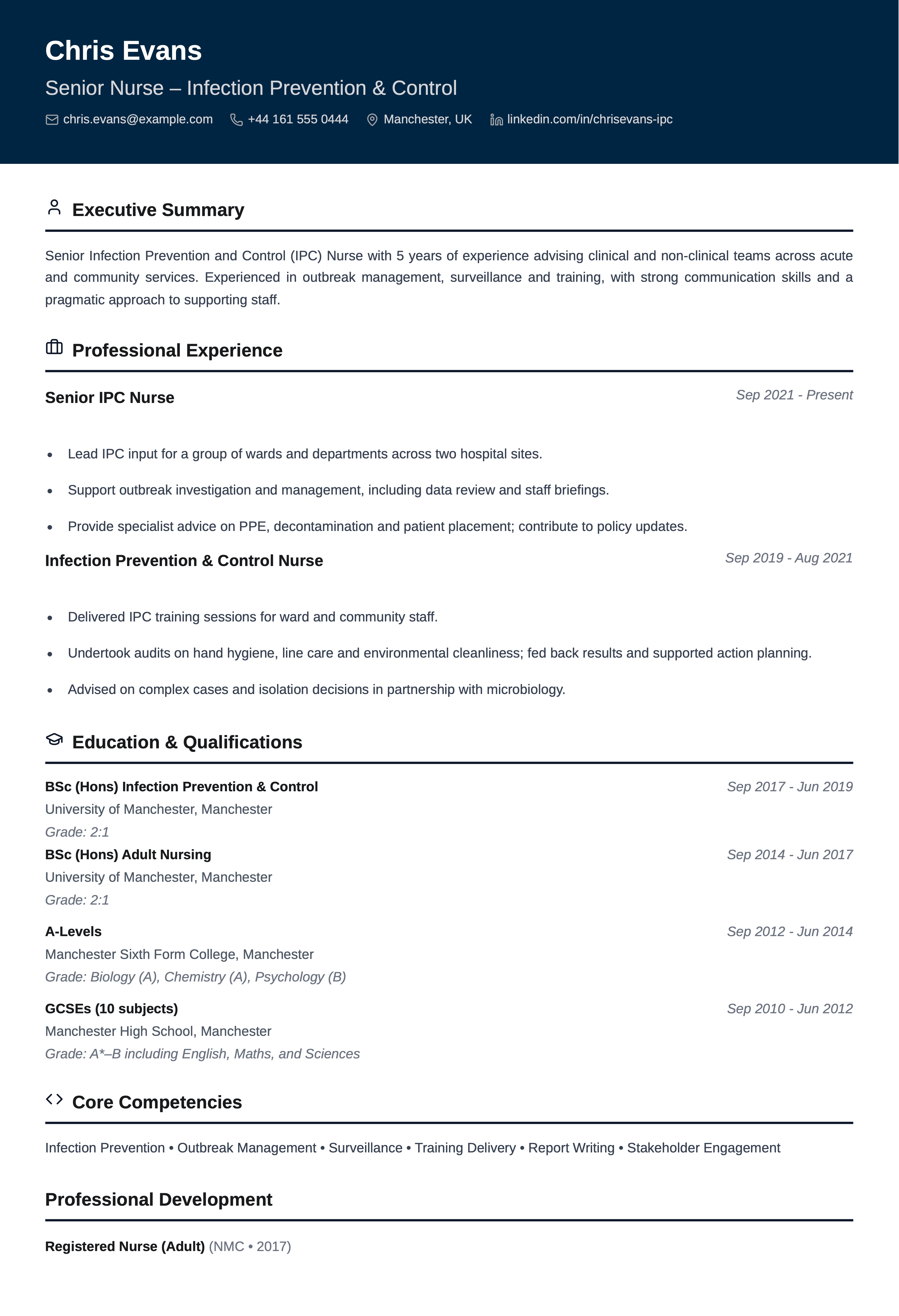
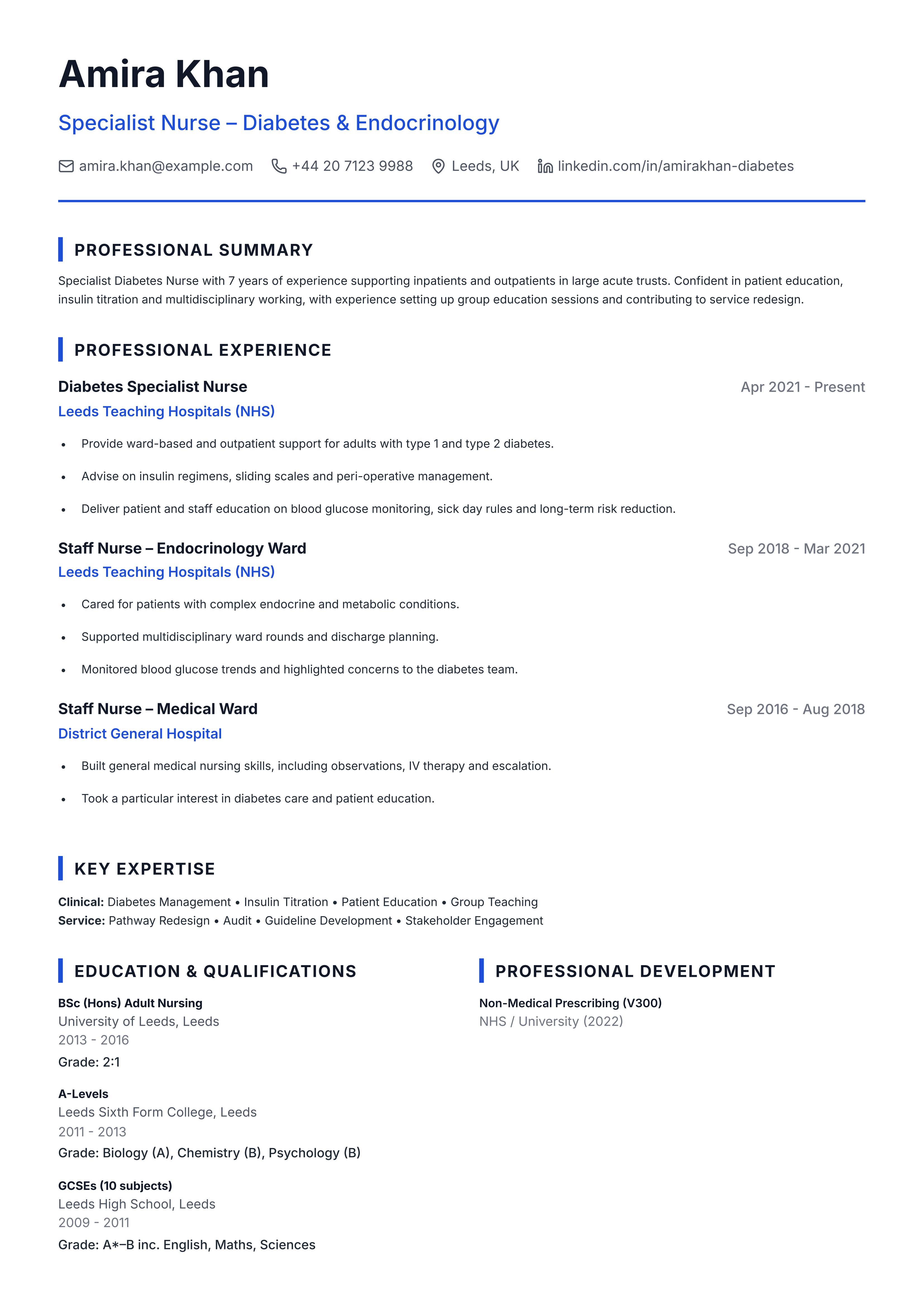
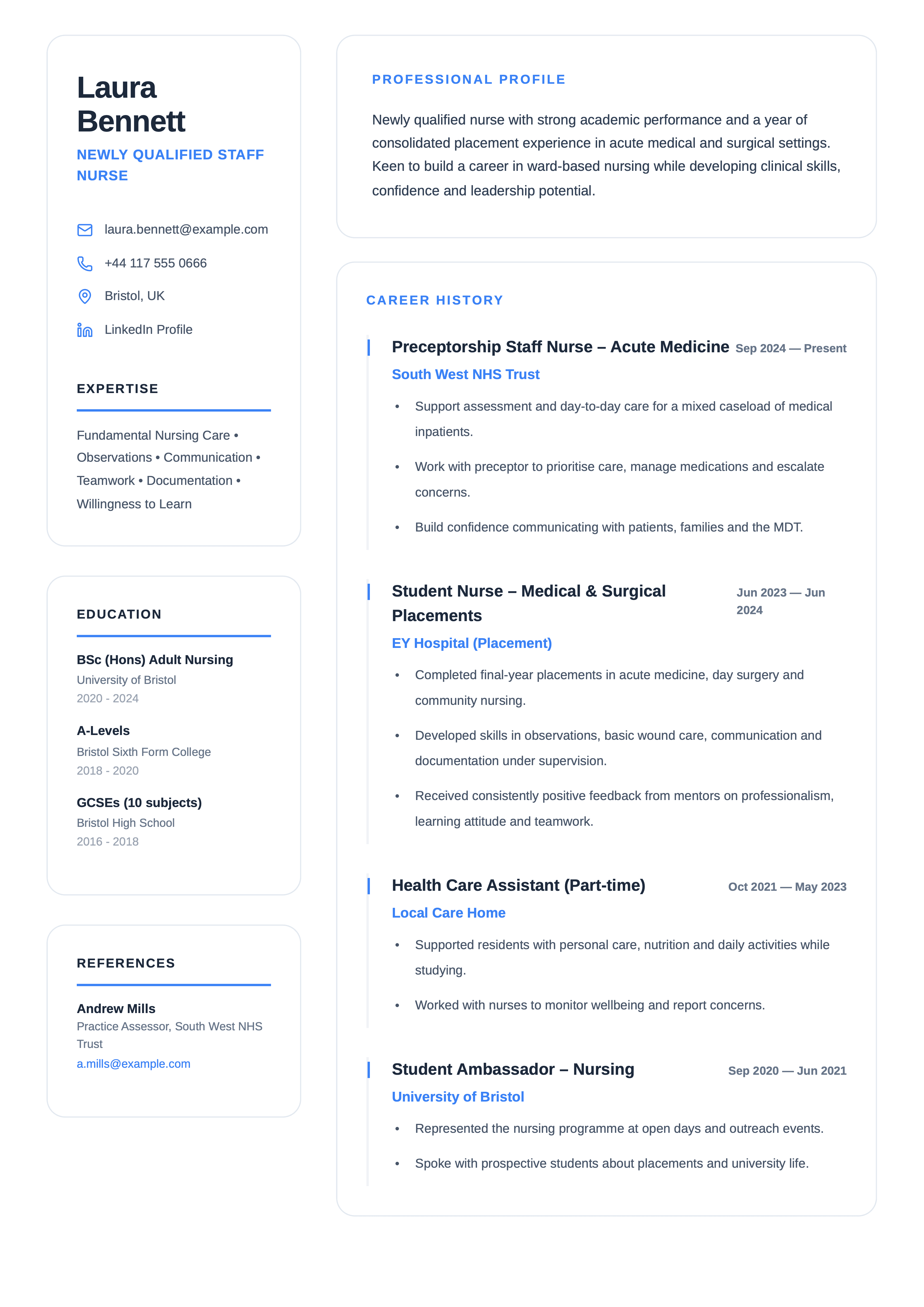
Take a look at the examples below and we will then break it down section by section.
How to Structure a Nurse CV
A strong nurse CV makes your NMC registration, clinical setting and seniority obvious in seconds. Recruiters and automated systems often check for registration, relevant specialty and recent experience before they read detail.
Structure your CV so your PIN status (or expected registration date if applicable), band or equivalent seniority, and current role are impossible to miss.
What recruiters scan first
Typically: contact details and professional title, professional summary, NMC registration line, current or most recent clinical role, then skills and education. If those sections match the job description, you are more likely to get a full read.
A structure that works:
- Name and professional title (e.g. Registered Nurse, RGN)
- Professional summary tailored to the role (keep it short; see below)
- NMC registration (and revalidation in date where relevant)
- A short key-skills / achievements section near the top to show fit quickly
- Clinical skills and competencies aligned to the specialty
- Work experience in reverse date order, most recent first
- Education (BSc / DipHE Nursing) and additional training (ALS, mentorship, etc.)
- Optional: audits, QI projects, teaching; interests only if they add something credible
Format and length
Aim for two pages for most qualified nurses: enough space for rotations and courses, still skimmable. Use clear section headings, bullet points for roles, and a simple font. Lead with facts employers search for (specialty, acuity, caseloads, leadership, governance).
Reverse chronological vs skills-first
Most nurses should use reverse chronological work history. A skills-first layout can work for newly qualified nurses with strong placement variety or career changers, as long as you still evidence outcomes and scope.
Contact Details
Put your full name, professional email and phone number at the top. A clear line such as "Registered Nurse (Adult)" or "NMC Registered" helps immediate screening.
Town or city is enough for location; you do not need your full address at application stage. LinkedIn can help if your profile matches your CV.
What to include
- Full name and how you want to be addressed professionally
- Professional email address
- Mobile number
- Town or city (optional)
- LinkedIn URL (optional)
What to leave out
- Full home address
- Date of birth
- Marital status
- Full NI number on the CV (unless specifically requested)
Professional Summary
Use this section to state your registration field, years qualified, current setting and the role you want next. Tie in phrases from the job advert where they are accurate: for example critical care, community caseloads, or practice nursing.
Keep it factual and specific, and roughly within about four to six lines (many guides suggest under 100 words). Avoid empty claims; use space for specialty, patient group and leadership instead.
In the examples below, the highlights follow the same idea each time: registration and seniority (band, years, field), clinical focus (setting, acuity, caseload), and impact and standards (safety, education, governance).
Registered Nurse (Adult) with NMC PIN and 6+ years in acute medical wards. Experienced in acutely unwell patients, NEWS2 escalation and mentoring band 4 staff and students.
Practice nurse with NMC registration and specialist interest in respiratory care. Skilled in chronic disease reviews, vaccination clinics and MDT working with GPs and community teams.
Newly qualified RGN with NMC registration and preceptorship underway. Placement experience in surgical and elderly care, medicines management and documentation to NMC standards.
Skills
Align skills with the specialty: an ICU CV should emphasise monitoring and escalation; a community CV should emphasise caseload management and lone working. Split technical clinical skills from leadership and communication where it helps readability.
Aim for a tight mix of evidence-based skills (assessment, medicines, procedures you are competent in) and professional skills (safeguarding, documentation, teamwork). Around 8 to 14 well-chosen lines often works well.
Only list skills you can discuss at interview; overclaiming competencies is risky in regulated roles.
Professional Experience
List roles in reverse chronological order with employer, job title, band (if NHS) and dates. Use bullets for responsibilities and outcomes; numbers and standards beat adjectives.
A clear structure for each role
For each job, a layout that matches how recruiters read helps:
- Context: one line on trust or setting, specialty and patient group
- Responsibilities: assessment, ward or caseload, MDT, leadership tasks
- Achievements: safety, education, waiting times, audit, patient experience
How to write strong experience bullets
Good pattern: what you did + patient or service context + outcome. For example: "Led monthly pressure-ulcer audit on a 28-bed ward; sustained zero grade 3–4 ulcers over two consecutive quarters."
Open bullets with clinical-first verbs (for example "triaged," "escalated," or "stabilised") so responsibility and patient impact are obvious at first scan.
Useful details include bed numbers, acuity, supervision of others, and courses completed in post.
- Acuity, bed numbers or caseload where appropriate
- Leadership (shift coordinator, link roles)
- Education (students, junior staff)
- QI, audit, governance without breaching confidentiality
Coordinated discharge planning for complex medical patients, reducing average length of stay by 0.8 days through earlier MDT referrals and pharmacy reconciliation on day of admission.
Responsible for patient care on the ward.
Education & Qualifications
Include your nursing degree or diploma, NMC registration details (field of practice), and relevant post-registration courses (non-medical prescribing where applicable, ALS, mentorship, specialty modules).
Pre-registration education: list institution, qualification and classification or merit where it helps. GCSEs can be summarised in one line unless the employer asks for detail.
What to include based on your path
Newly qualified nurses should foreground NMC registration (or expected date), preceptorship and key placements. Experienced nurses should show CPD and any step-up into leadership, practice teaching or specialist roles.
BSc (Hons) Adult Nursing
University of Manchester, 2018 - 2021
NMC Registered Nurse (Adult) – PIN
Registered 2021; revalidation current
Additional training
ALS, mentorship preparation, service improvement workshop (examples as relevant)
Projects & Additional Information
Use this for quality improvement projects, audit cycles, implementation of pathways, or secondments that do not sit neatly under one job title.
Optional: professional memberships (RCN), conference presentations, or voluntary first aid—only if relevant and recent.
Career achievements and awards
Short listings work well: Daisy Award nomination, trust recognition, or leading a bundle compliance drive. Pair each with a date or measurable outcome.
Make sure your CV passes ATS checks
Many employers screen CVs electronically before a human reads them. To improve your chances:
- Use standard section headings recruiters expect
- Mirror key terms from the job description where truthful
- Reflect person-spec criteria and organisation values in your wording where accurate
- Avoid tables and text boxes that parsers struggle with
- Export to PDF only if the employer allows it; otherwise use Word if asked
- Keep layout simple and legible
Before you send: align the wording with the person specification, proofread drug names and dates, and ensure your NMC line matches the register. A colleague in your specialty reviewing your CV often catches gaps.
If possible, ask two people to proofread your final version before submitting. Small errors can undermine an otherwise strong nursing application.
References
It is normal to write "available on request" unless the advert asks for referees up front. Clinical and line managers who have directly supervised your practice are usually strongest.
What to include for each referee
- - Full name and title
- - Organisation and ward or department
- - Work email and/or phone
- - Relationship (e.g. line manager, practice supervisor)
Ready for your next nursing role?
Choose a nurse template and start editing.
Browse Nurse CV Templates