Medical CV Examples
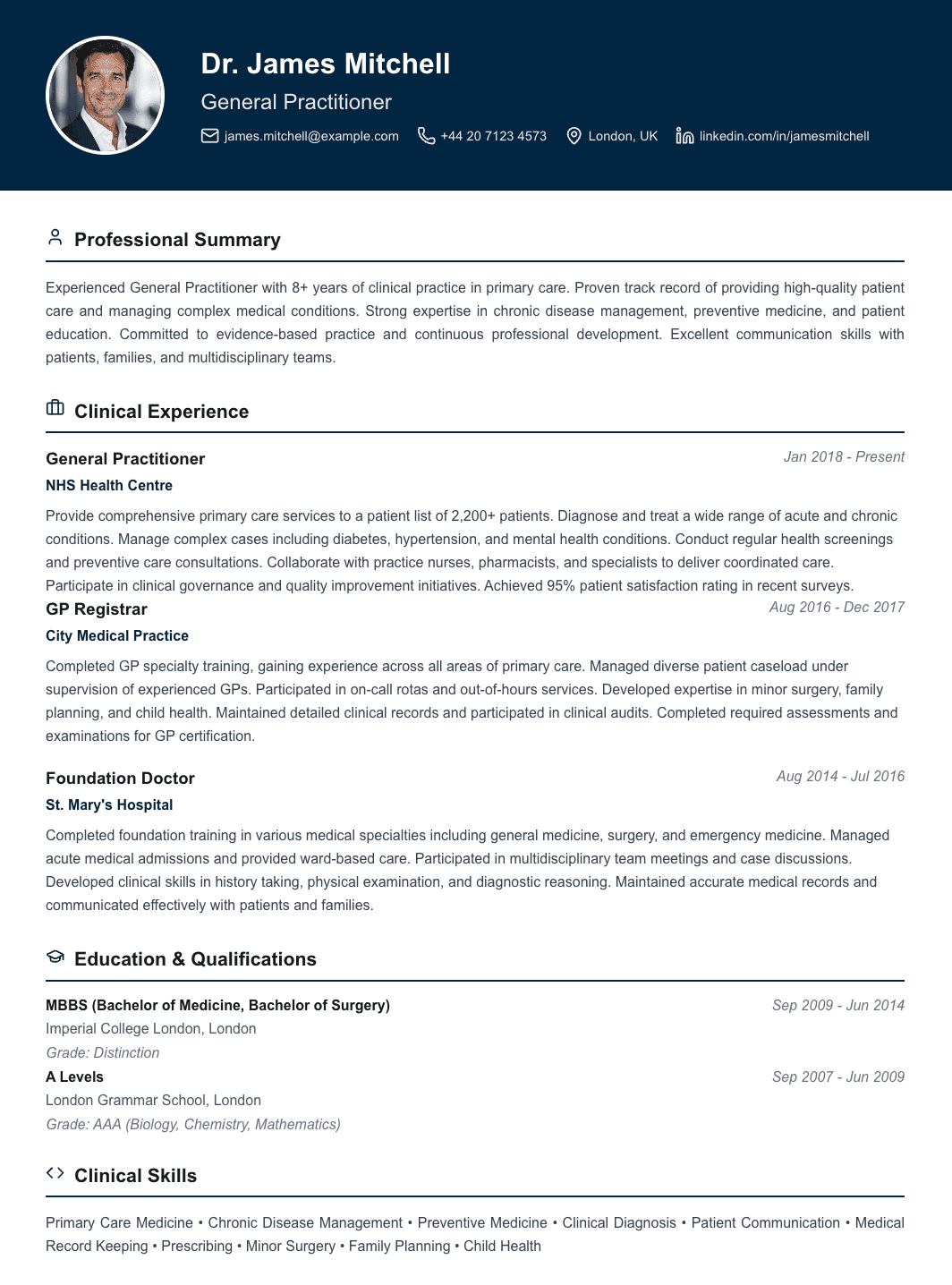
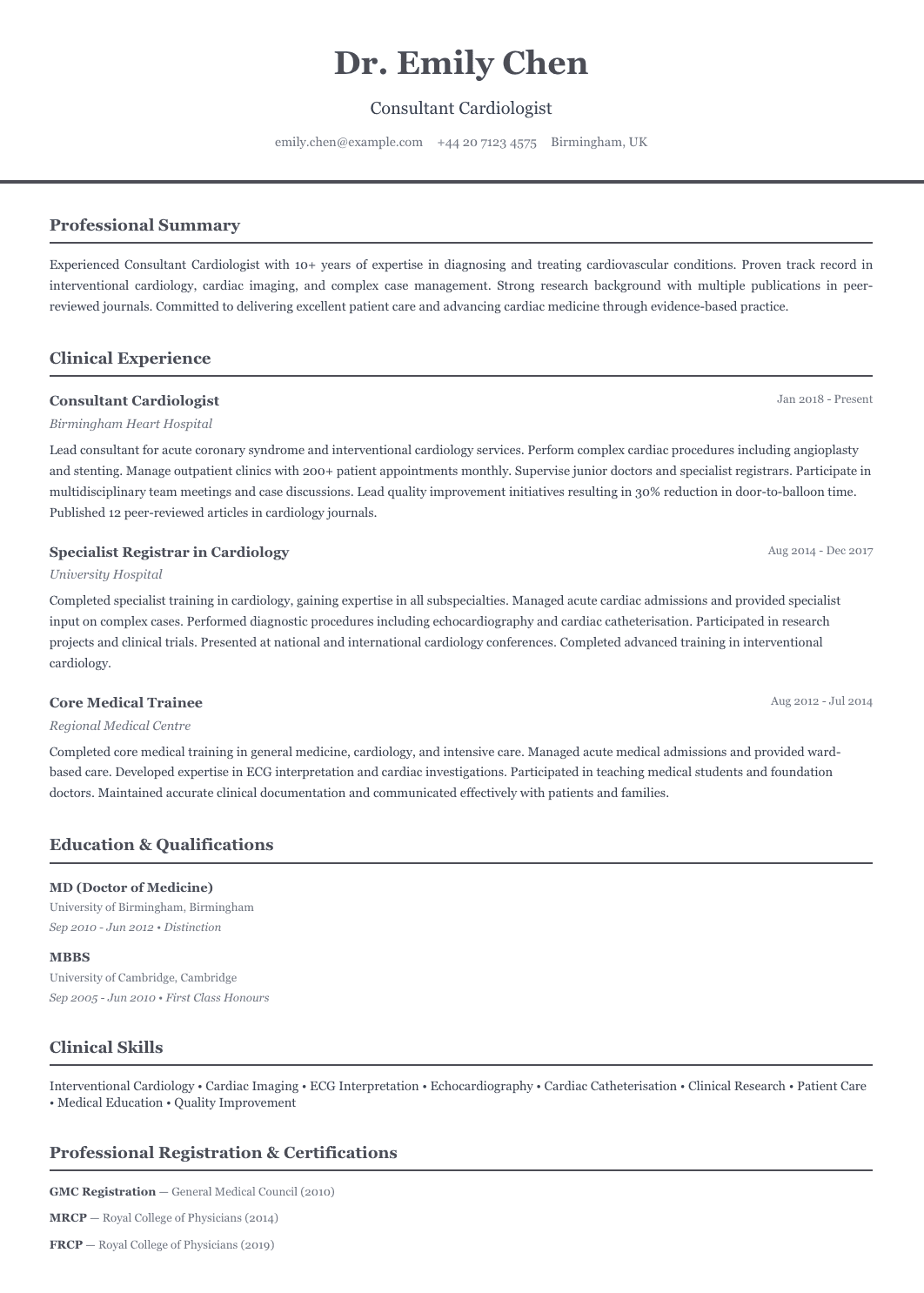
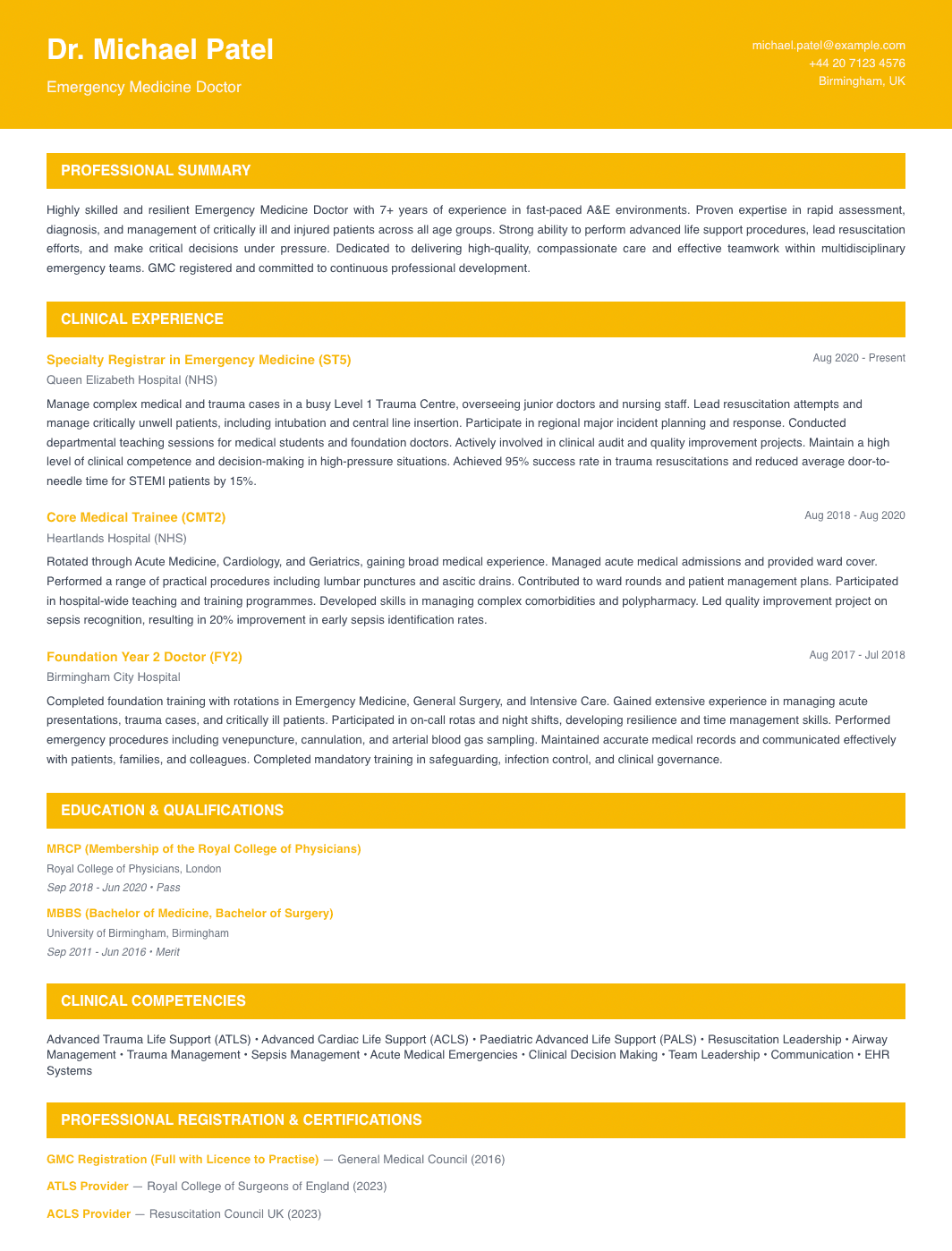
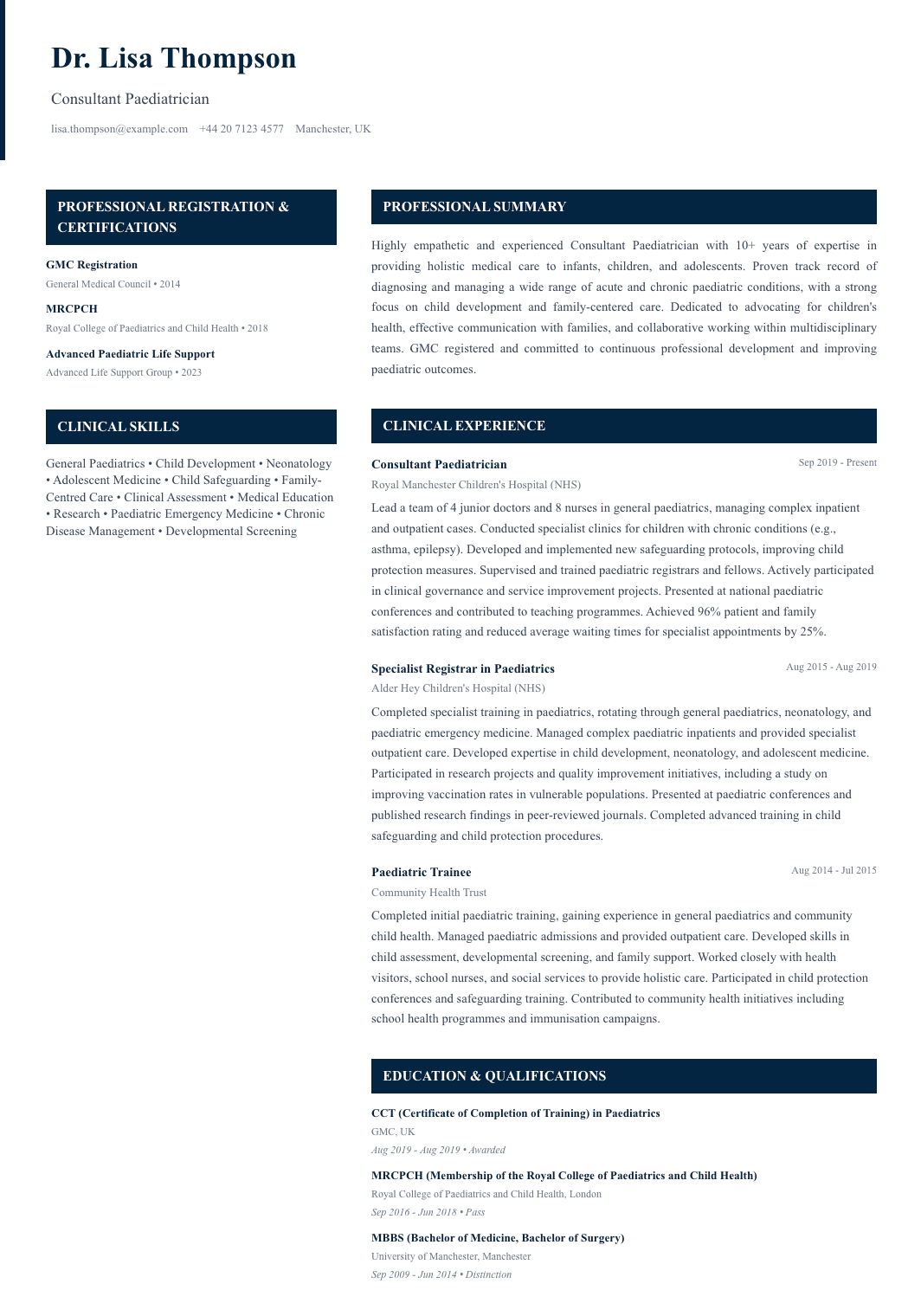
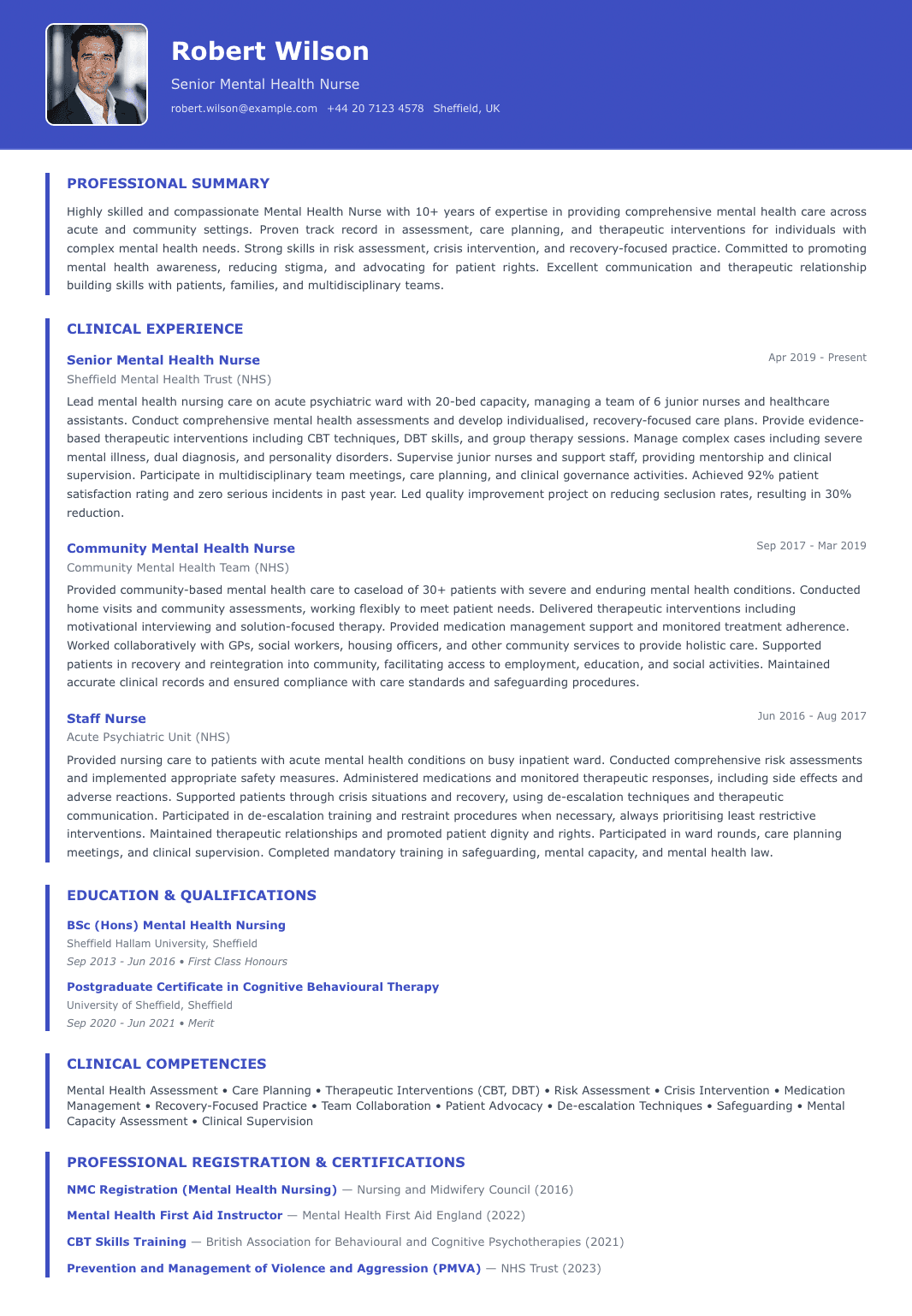
Take a look at the examples below and we will then break it down section by section.
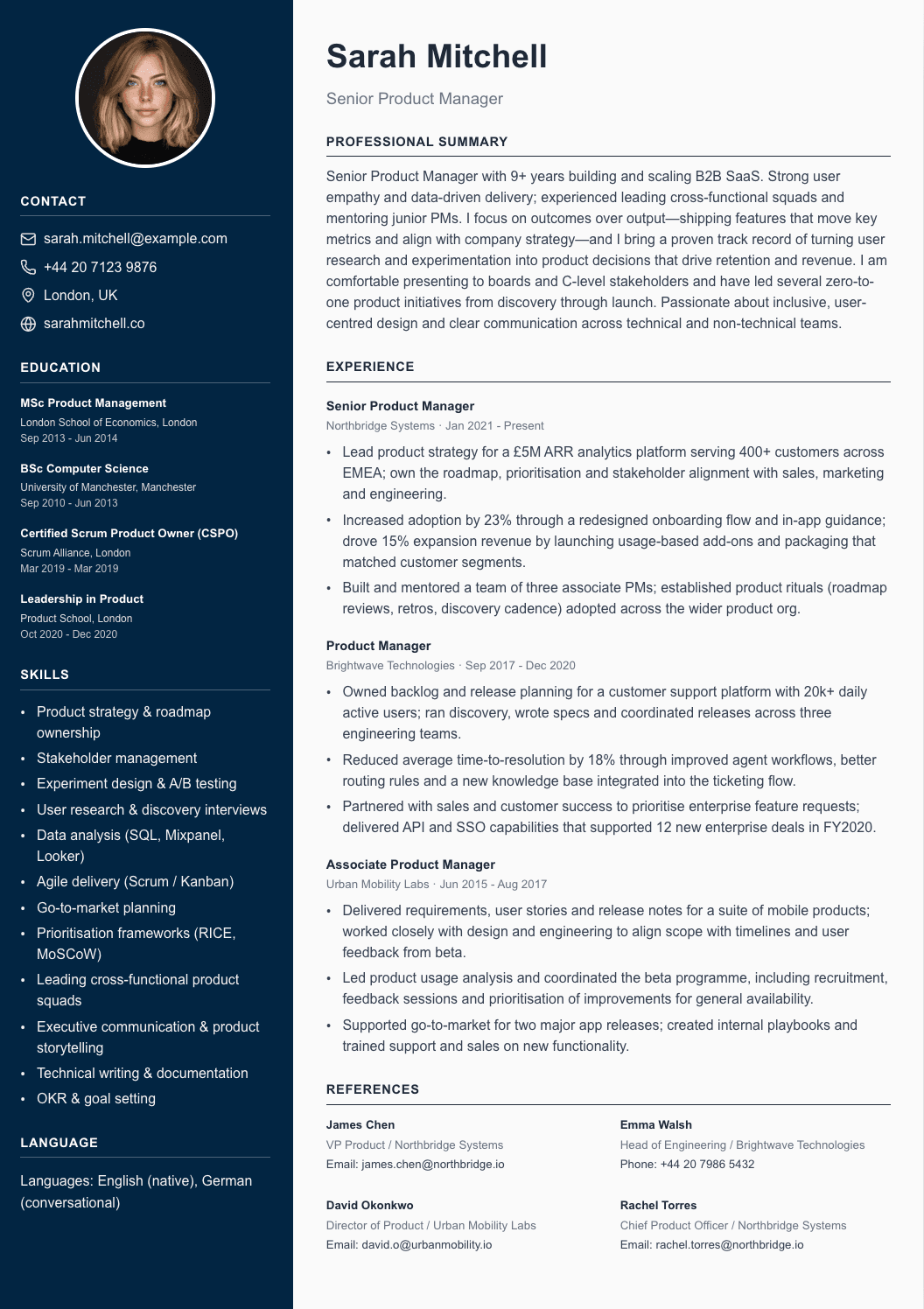
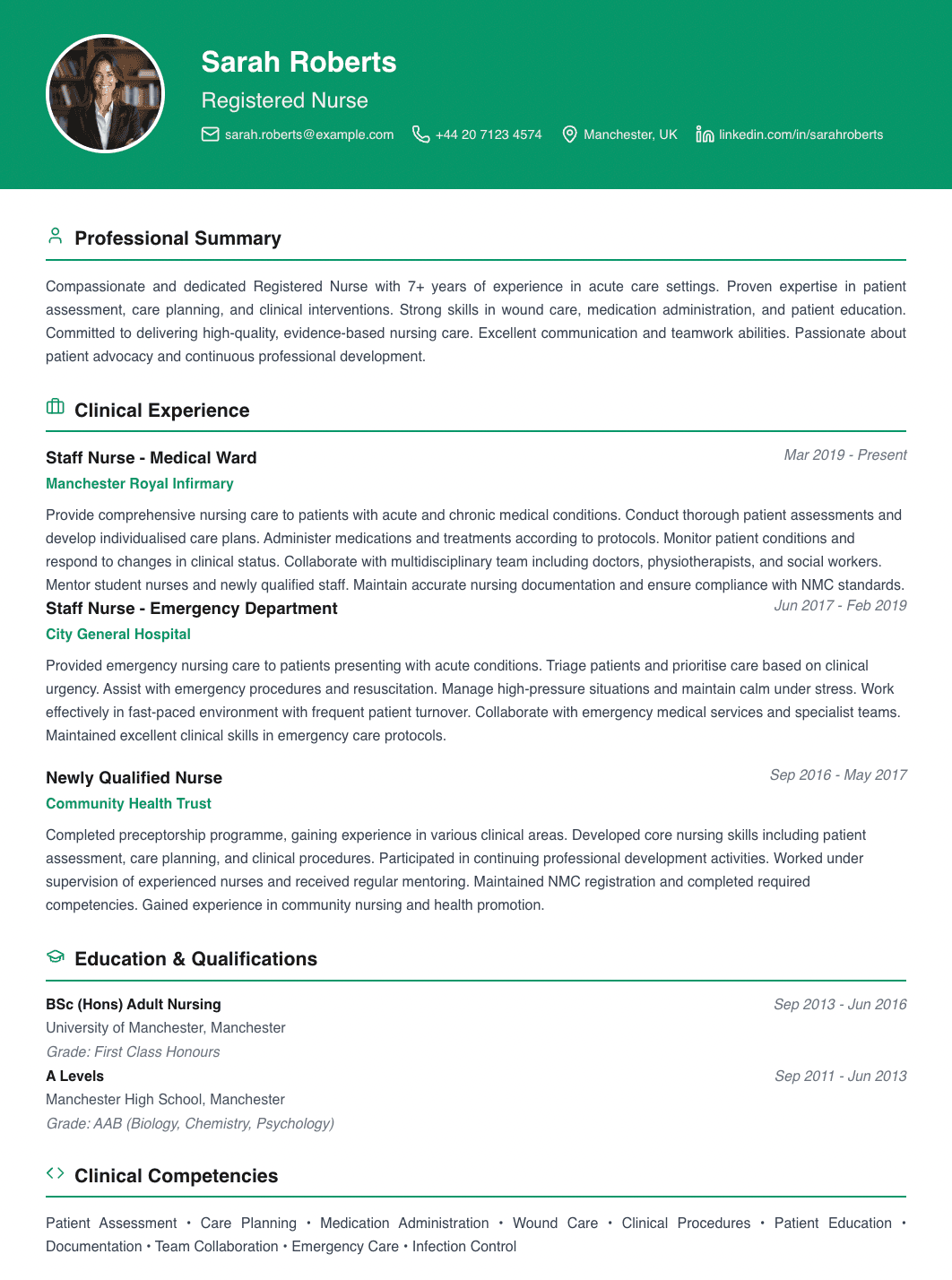
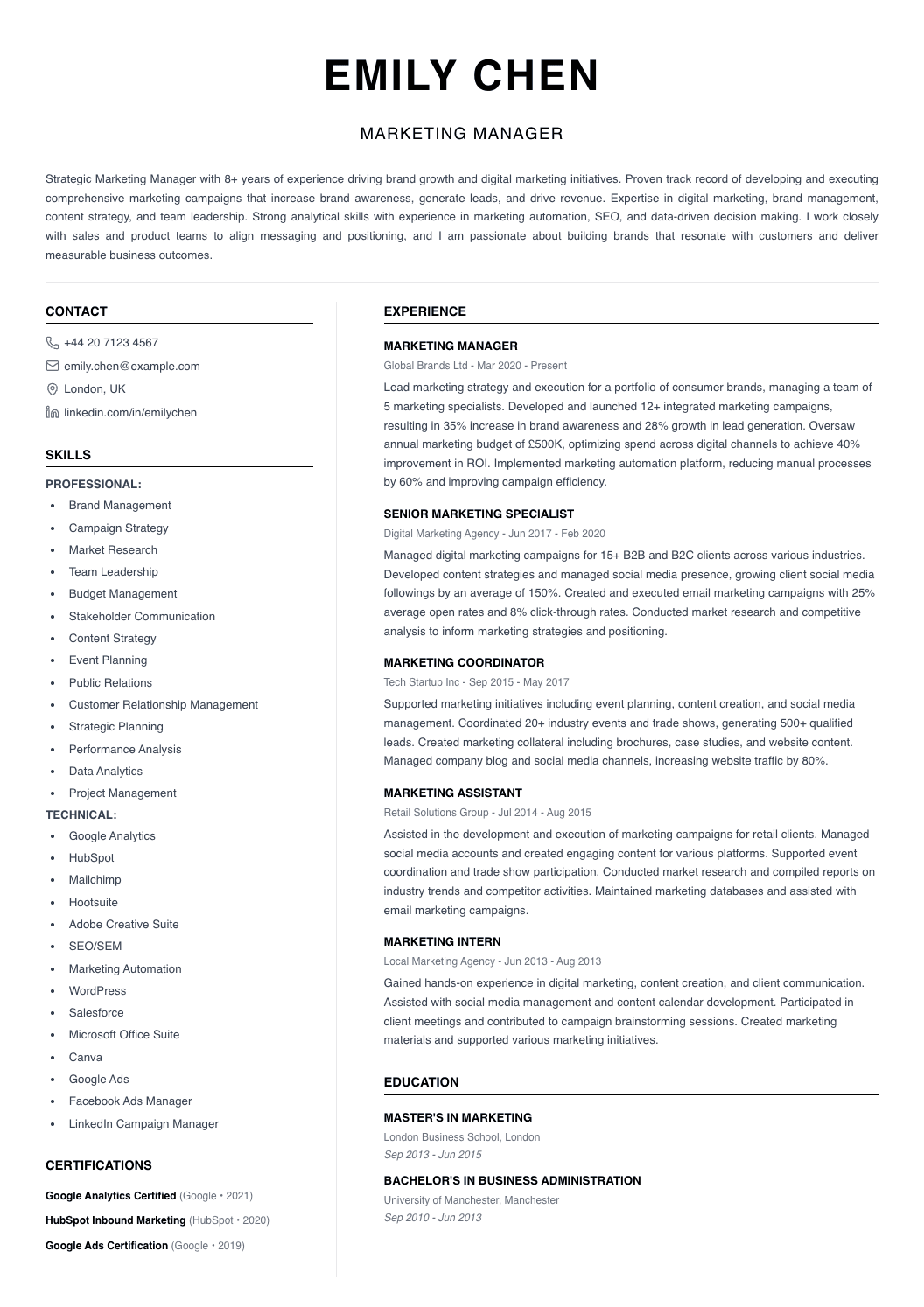
How to Structure a Medical CV
A well-structured CV is one that communicates your expertise to recruiting teams effectively. Employers often spend under a minute reading CV's on first pass so it's important to stand out when someone scans your CV but also when they go more in depth.
A well-structured CV allows employers to quickly recognise that you have the skills, experience and qualifications for the role.
What recruiters scan first
Recruiters usually scan your CV in this order: contact details, professional summary, most recent role, then qualifications. If those sections are easy to find and clearly written, you are more likely to make the shortlist.
A structure that works:
- Name and professional title at the top
- 2-4 line professional summary
- Clear, grouped key skills
- Most recent clinical role first
- Qualifications and registration details clearly listed
Contact Details
Your prospective employer needs a way to contact you and these details should include your full name, email address and phone number. You can also include your location but full address is too much information at this stage. Including the town or city that you're living in allows employers to understand your location and whether it's appropriate for the job.
What to include
- Full name and professional title
- Professional email address
- Mobile phone number
- Town or city (optional)
- LinkedIn profile (optional)
What to leave out
- Full home address
- Date of birth
- Marital status
- Photograph (unless specifically requested)
Professional Summary
Your professional summary should showcase your clinical expertise, professional judgement and ability to deliver patient care. We would recommend tailoring your summary to each job that you're applying for as recruiters will use this section heavily when making the initial cuts to the candidate list.
If you can highlight key skills that are mentioned in the job description it is worth doing so here. For example if the job description says they are looking for someone with experience in leading clinical audits make sure you clearly demonstrate your involvement in those areas.
GMC-registered doctor with 9+ years of clinical experience across acute and community settings. Strong track record in patient assessment, clinical decision-making and leading quality improvement projects that improved discharge efficiency and reduced readmissions.
NMC-registered nurse with 6 years of ward and outpatient experience, skilled in medication administration, care planning and multidisciplinary coordination. Recognised for safe patient care and consistent positive feedback from patients and senior clinicians.
Newly qualified healthcare professional with strong placement experience in acute care and triage support. Confident in patient communication, clinical documentation and working under pressure while maintaining high standards of patient safety.
Skills
The skills section is a chance to showcase your professional and clinical abilities. Be specific here (e.g. patient assessment, cannulation, catheterisation) and group similar skills together. Mention all of the skills you have attained that are in the job description and avoid overly general ones.
You may be asked everything mentioned here at interview so make sure to only list skills you have genuine experience in.
Professional Experience
List your professional experience in reverse chronological order, with your most recent role at the top. For each role, include the organisation, job title and employment dates, then use bullet points to show your responsibilities and outcomes.
Focus on impact and outcomes where possible, not just duties. Employers want to see how you improved patient care, supported service delivery or contributed to team performance.
How to write strong experience bullets
Write each bullet as: what you did + where/why + what changed. For example: "Led a weekend discharge planning process on a 28-bed medical ward, reducing delayed discharges by 15%."
Good bullets usually include:
- Caseload size or patient volume
- Clinical setting (ED, ward, community, outpatient)
- Measurable result (time saved, incidents reduced, compliance improved)
- Teamwork or leadership where relevant
Avoid generic lines that only list duties.
Led a ward-based documentation improvement project that reduced delayed discharges by 18% and improved handover quality across weekend shifts.
Responsible for patient care and ward duties.
Education & Qualifications
This section should clearly show the qualifications that allow you to practise in your role. Include your professional registration, degree-level qualifications and any clinical courses relevant to the jobs you're applying for.
What to include based on your role
For doctors, include GMC status, licence to practise, degree and relevant postgraduate exams. For nurses, include NMC registration, field of practice, degree and revalidation details. For allied health professionals, include HCPC registration and role-specific certifications.
If space is tight, prioritise:
- Registration status
- Core qualification(s)
- Recent role-relevant courses/certifications
MBBS Medicine
King's College London, Sep 2011 - Jun 2017
GMC Registration
Full licence to practise
Advanced Life Support (ALS)
Resuscitation Council UK, Valid to 2027
Projects & Additional Information
Projects are useful for showing contributions beyond day-to-day clinical duties. This can include audit work, service improvement projects, rota changes, patient safety initiatives, or training programmes you helped deliver.
This section is optional. Use it for details that strengthen your application but don't fit naturally into the sections above.
Make sure your CV passes ATS checks
Many healthcare employers use applicant tracking systems before a recruiter reviews your CV. To improve your chances:
- Use clear section headings (Skills, Professional Experience, Education)
- Mirror key terms from the job description naturally
- Keep formatting simple and readable
- Avoid putting key information inside graphics
- Submit in the requested format
A clear, keyword-aligned CV is far more likely to pass first screening.
- Languages spoken
- Teaching or mentoring responsibilities
- Conference presentations or posters
- Memberships (e.g. RCP, RCN, BMA)
- Volunteer healthcare work
References
Include references if requested, or write "available on request". For medical roles, references are often checked early, so make sure your referees are current and contactable.
What to include for each referee
- - Full name and title
- - Organisation / hospital
- - Email address and/or phone number
- - Your professional relationship
Ready to land your next medical role?
Choose a medical template and start editing.
Browse Medical CV Templates