Data Entry CV Examples
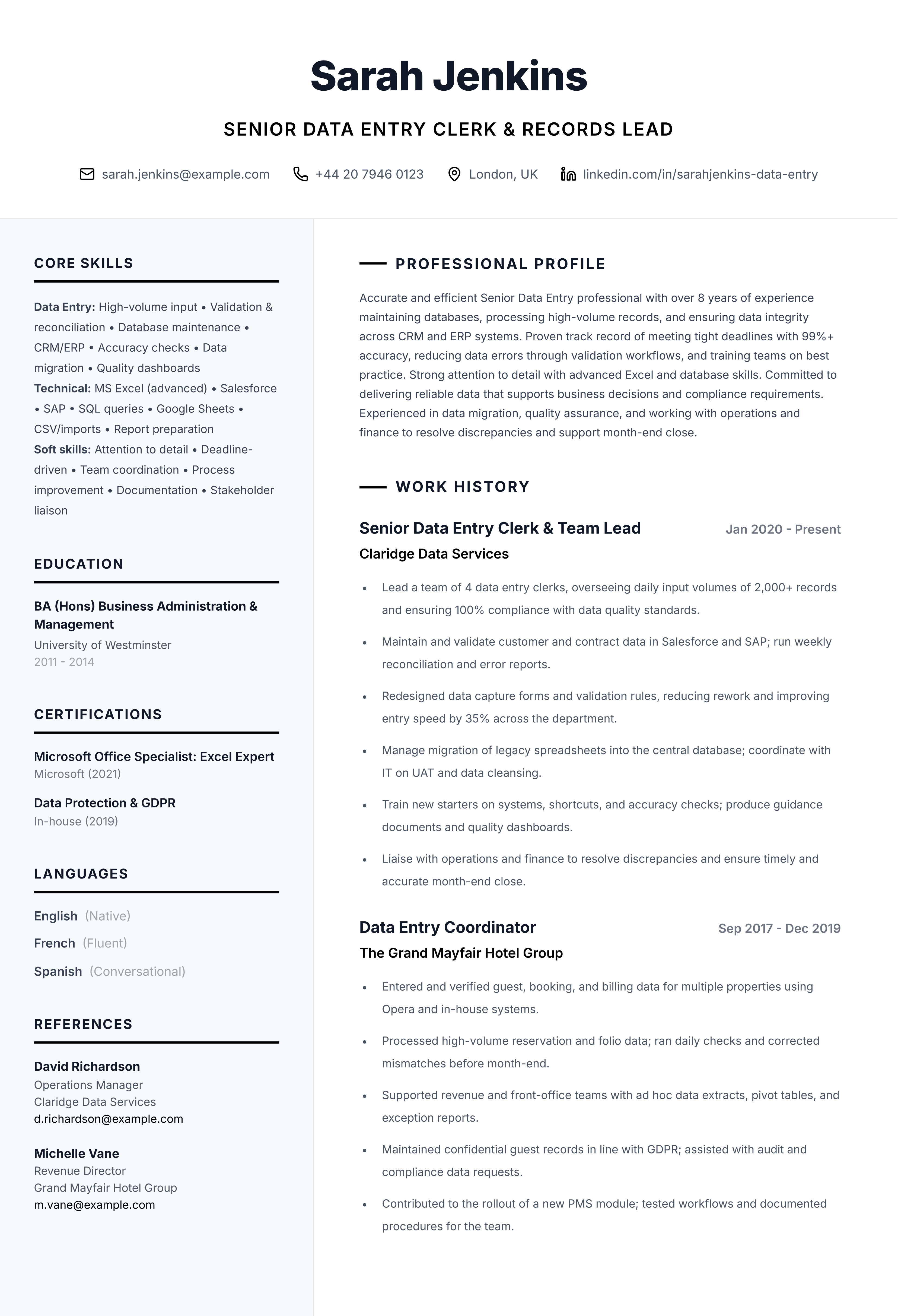
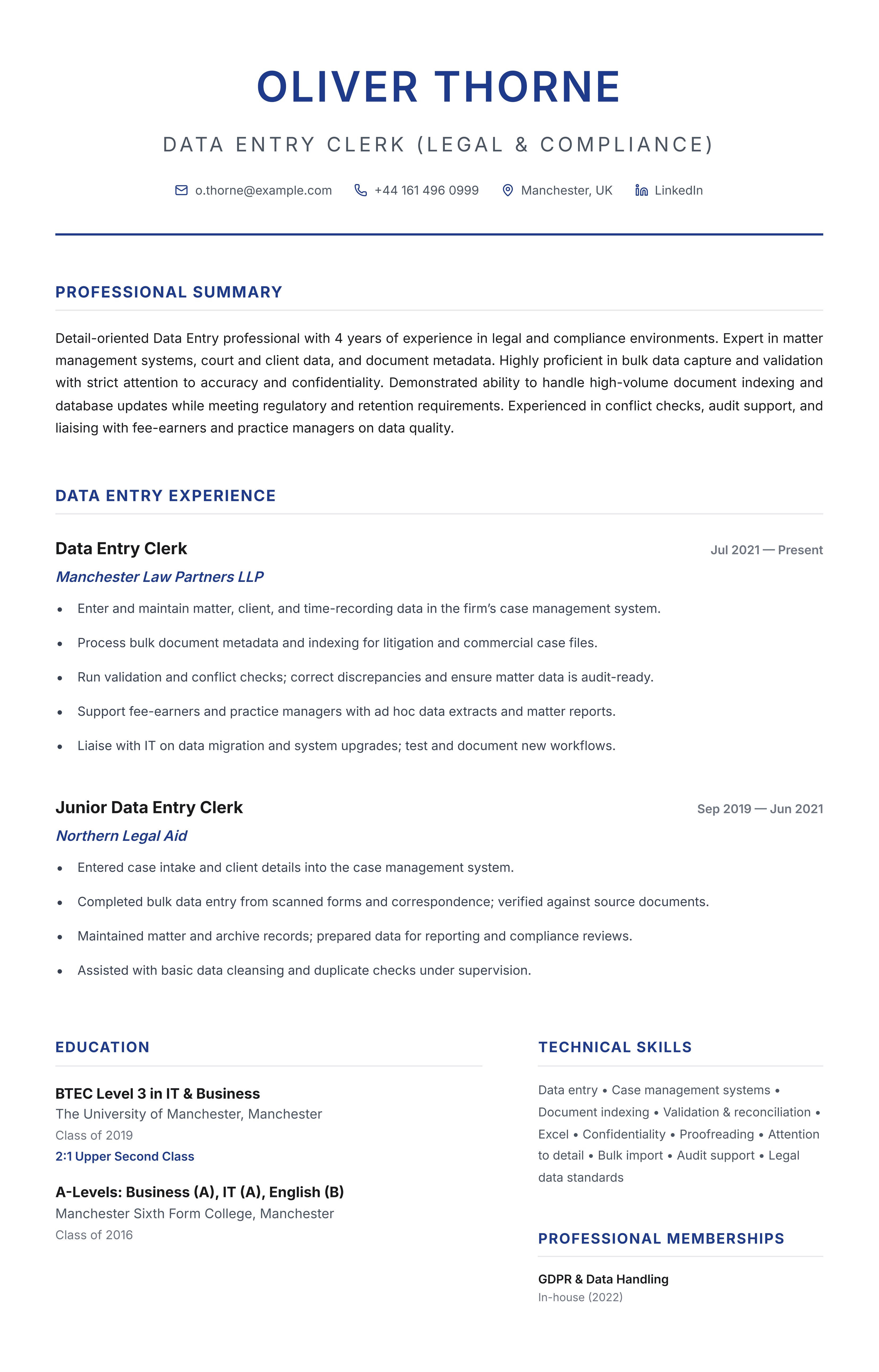
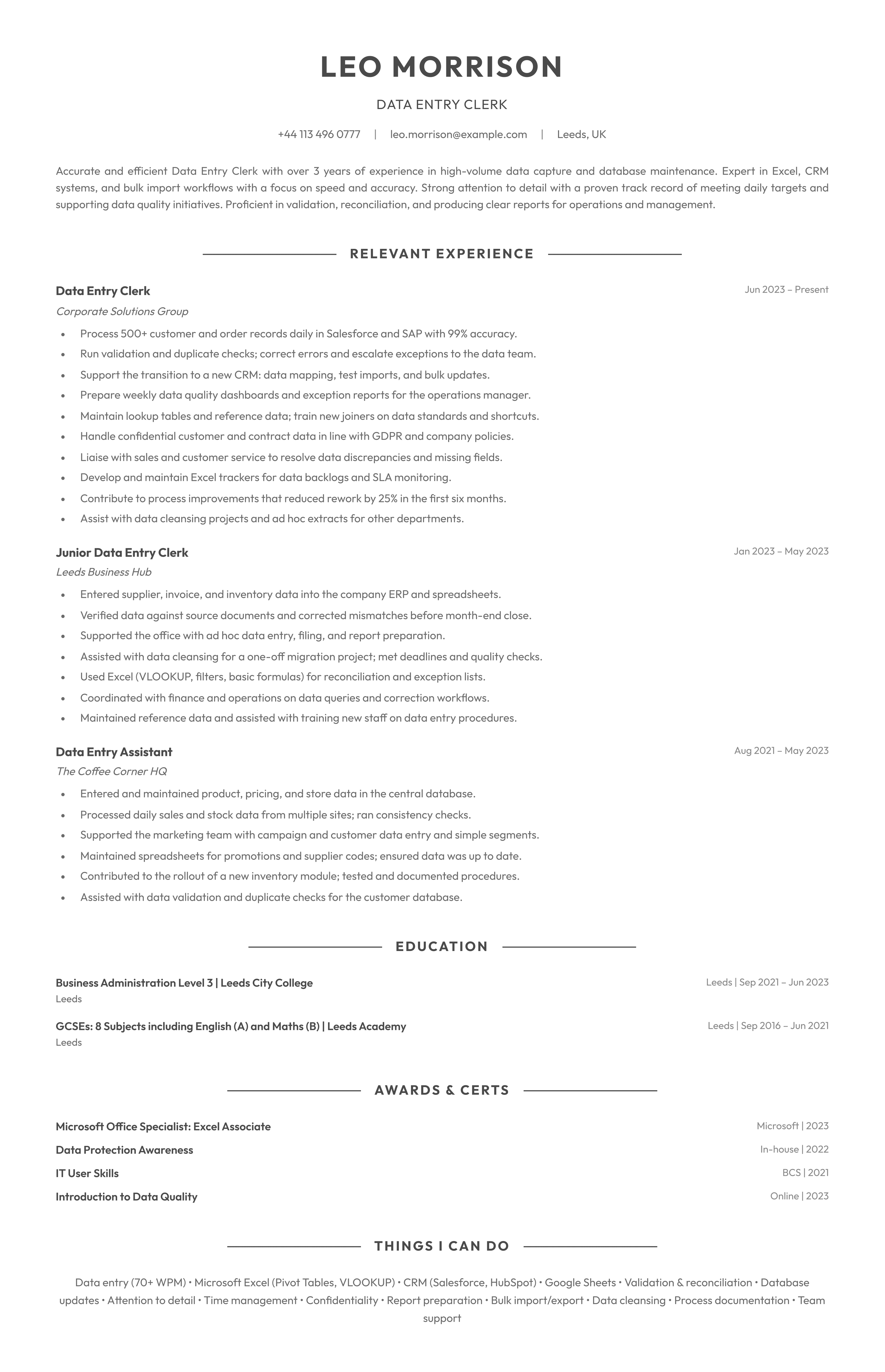
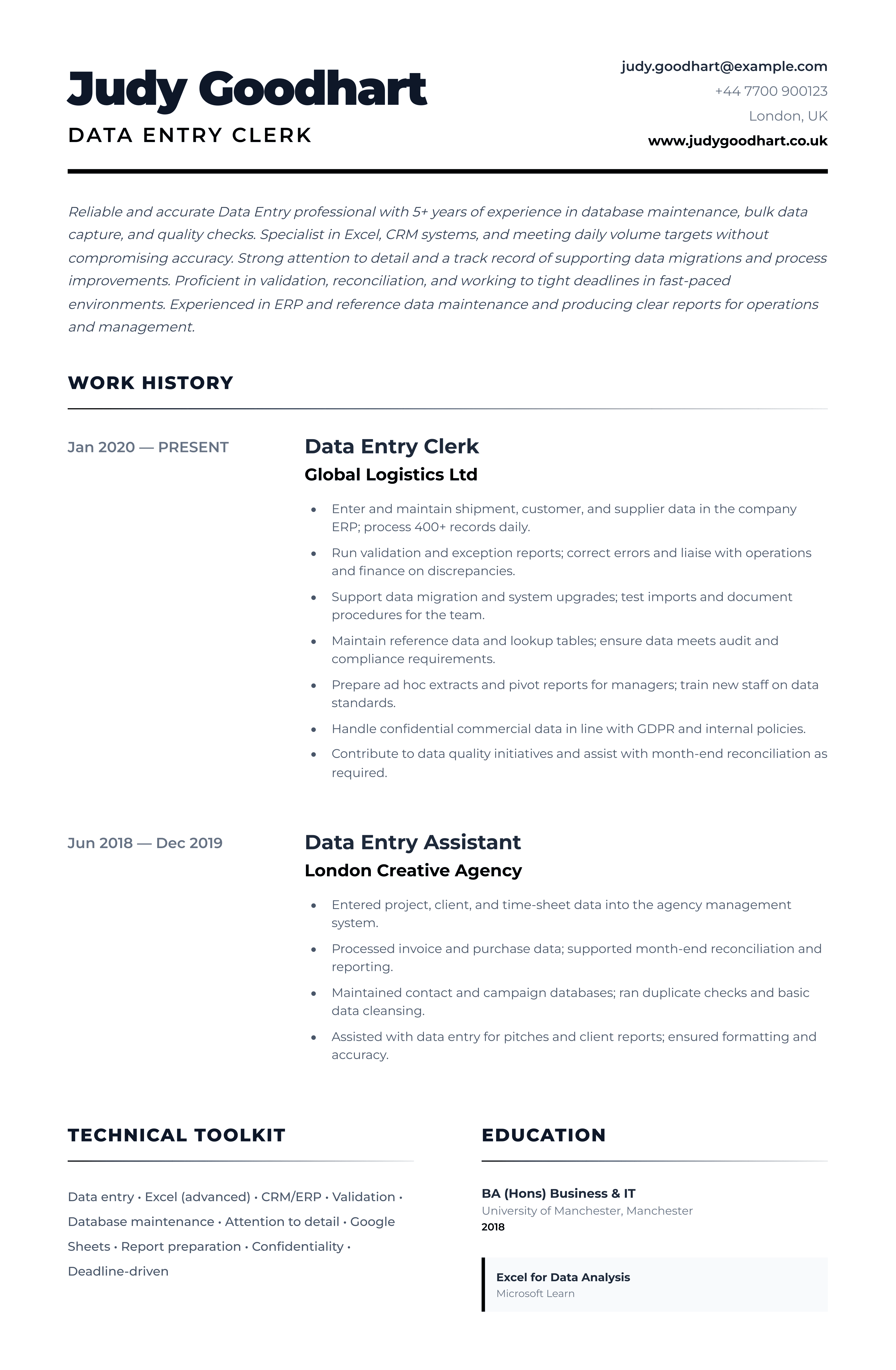
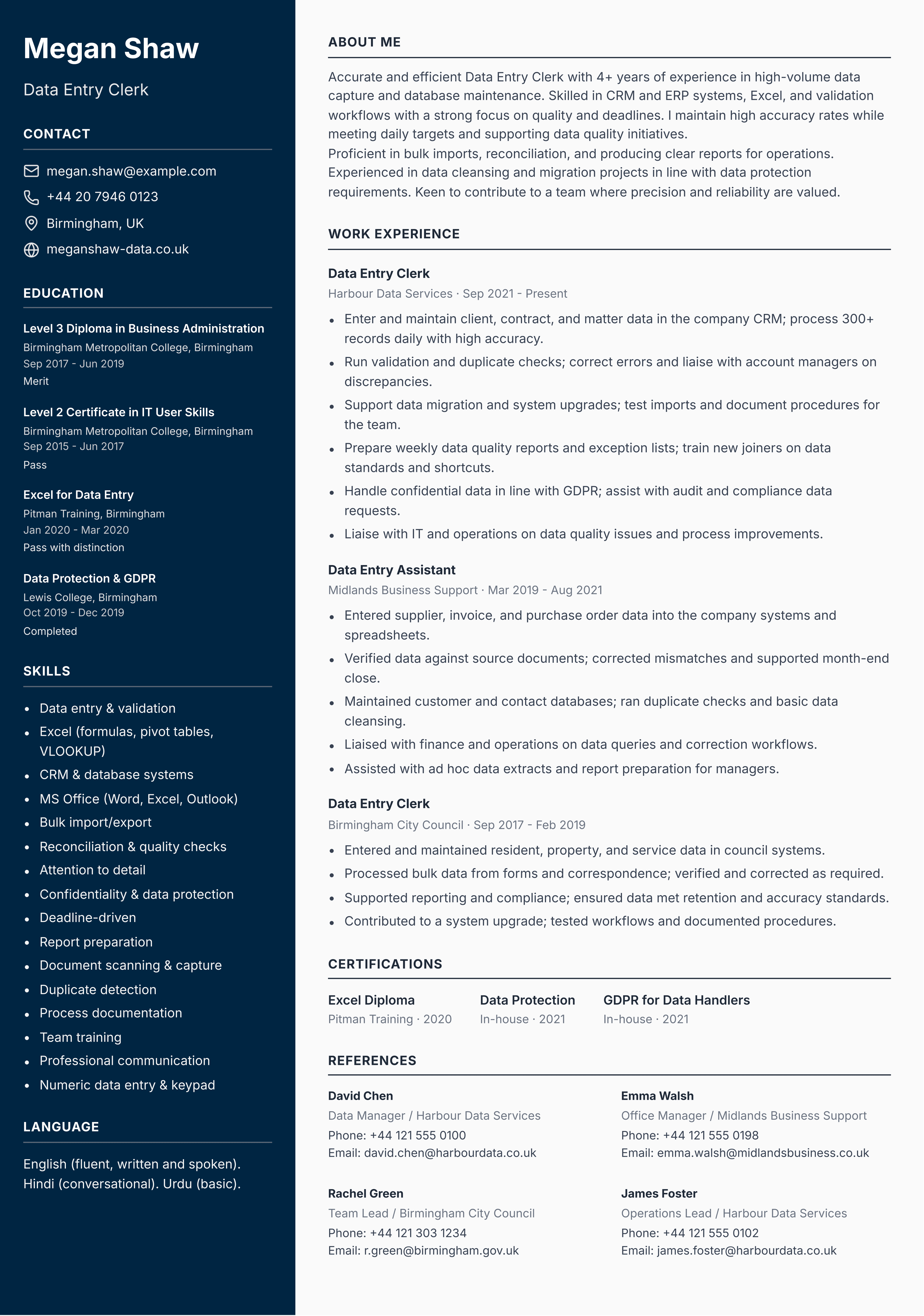
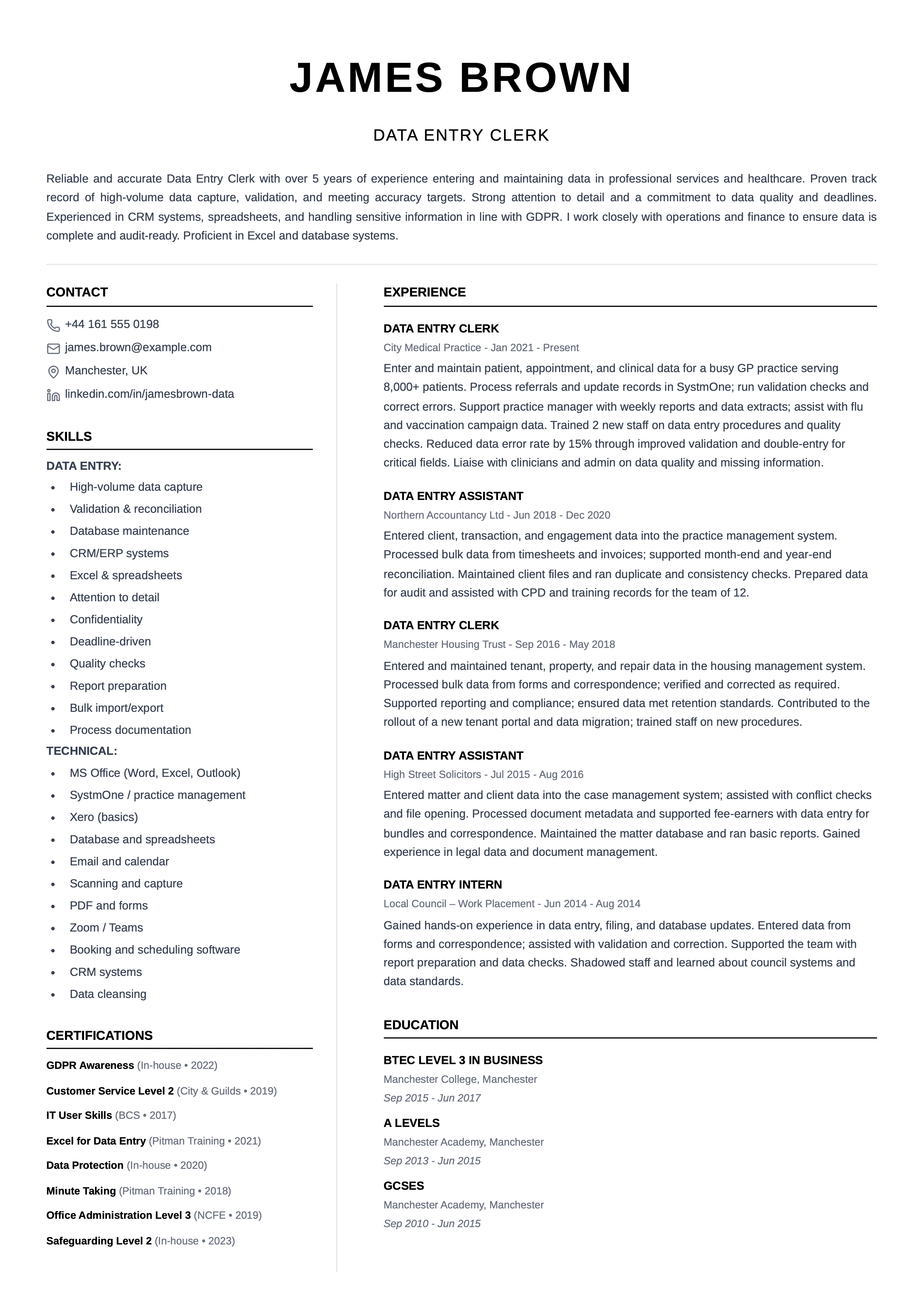
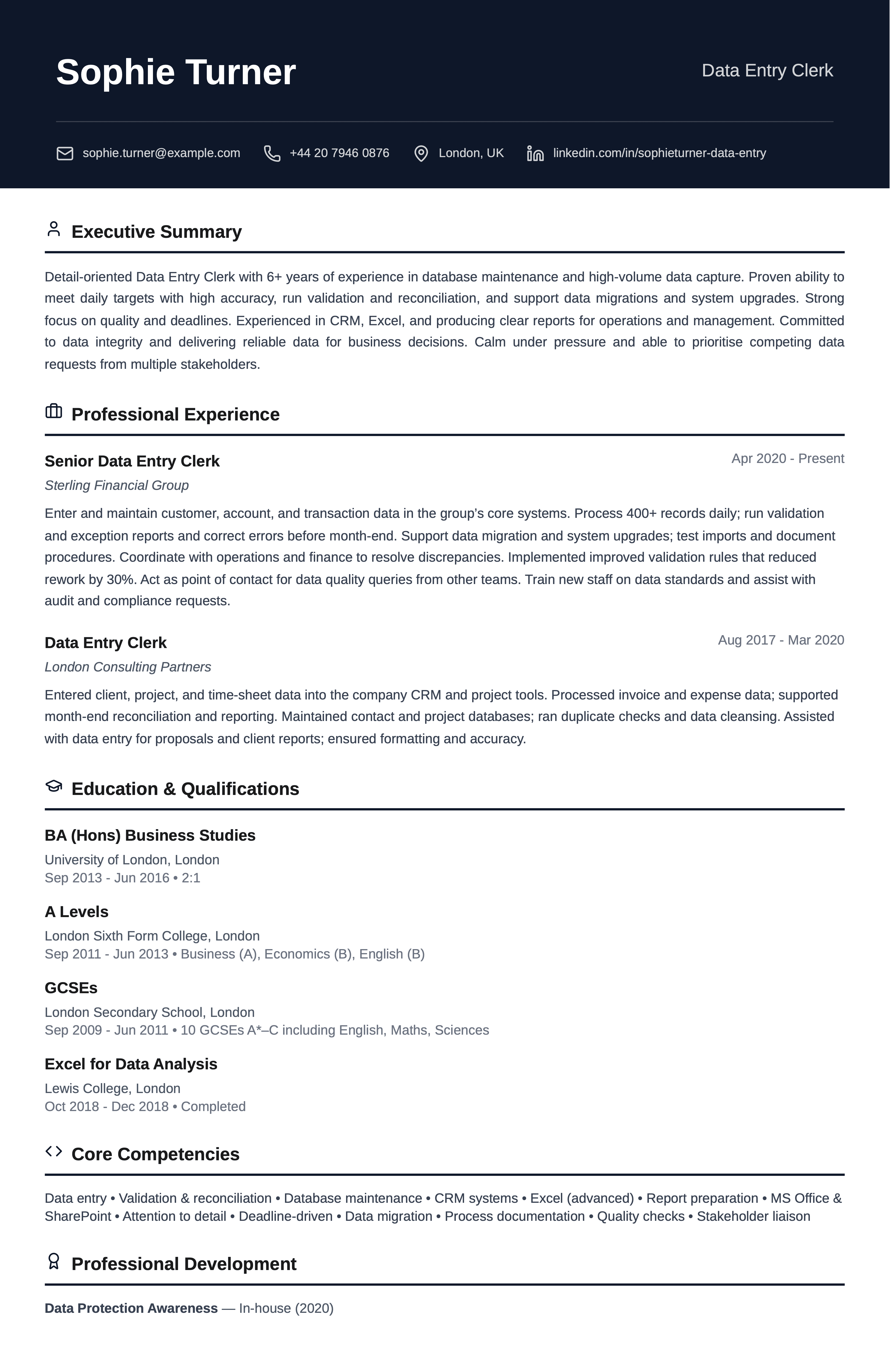
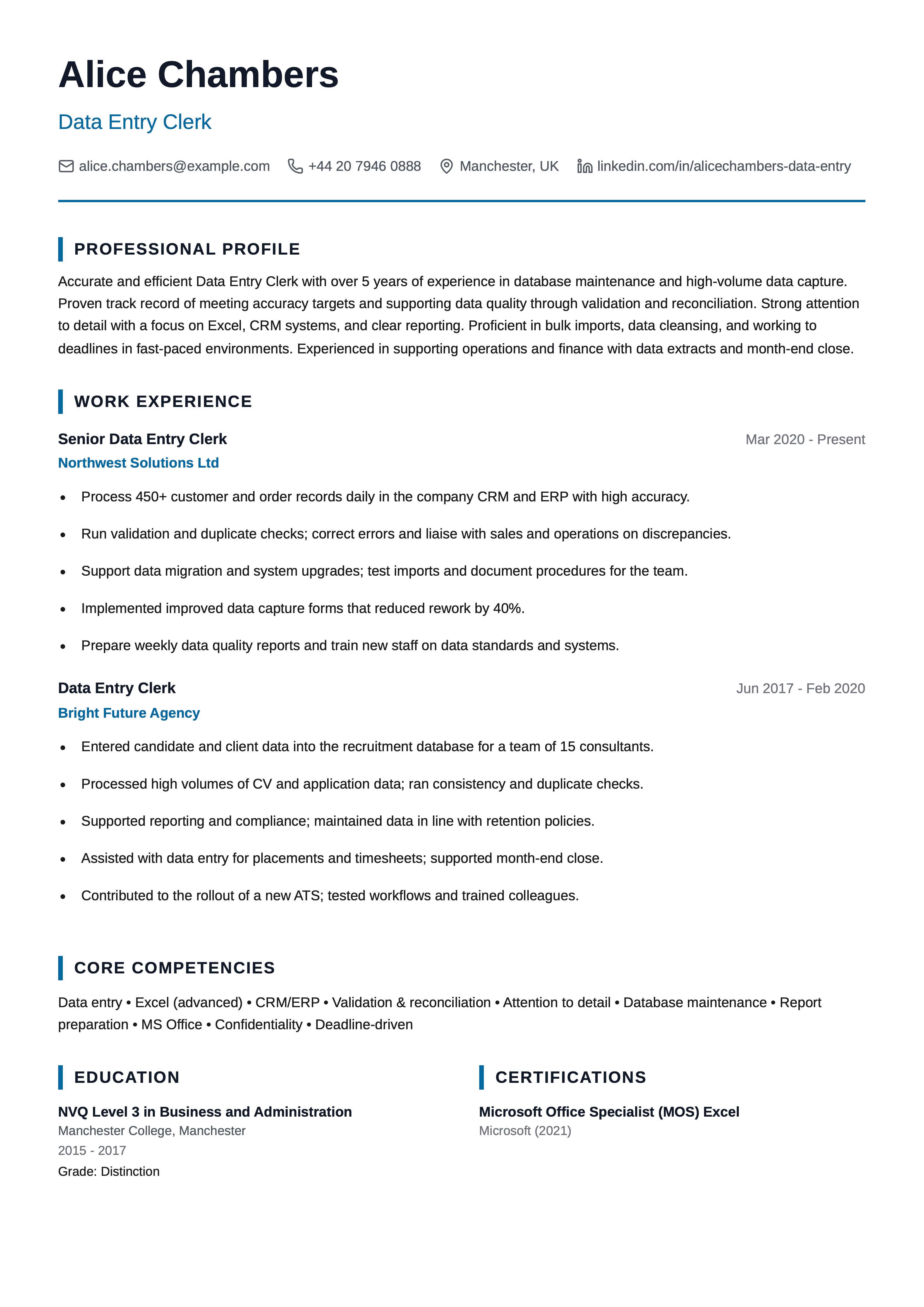
Take a look at the examples below and we will then break it down section by section.
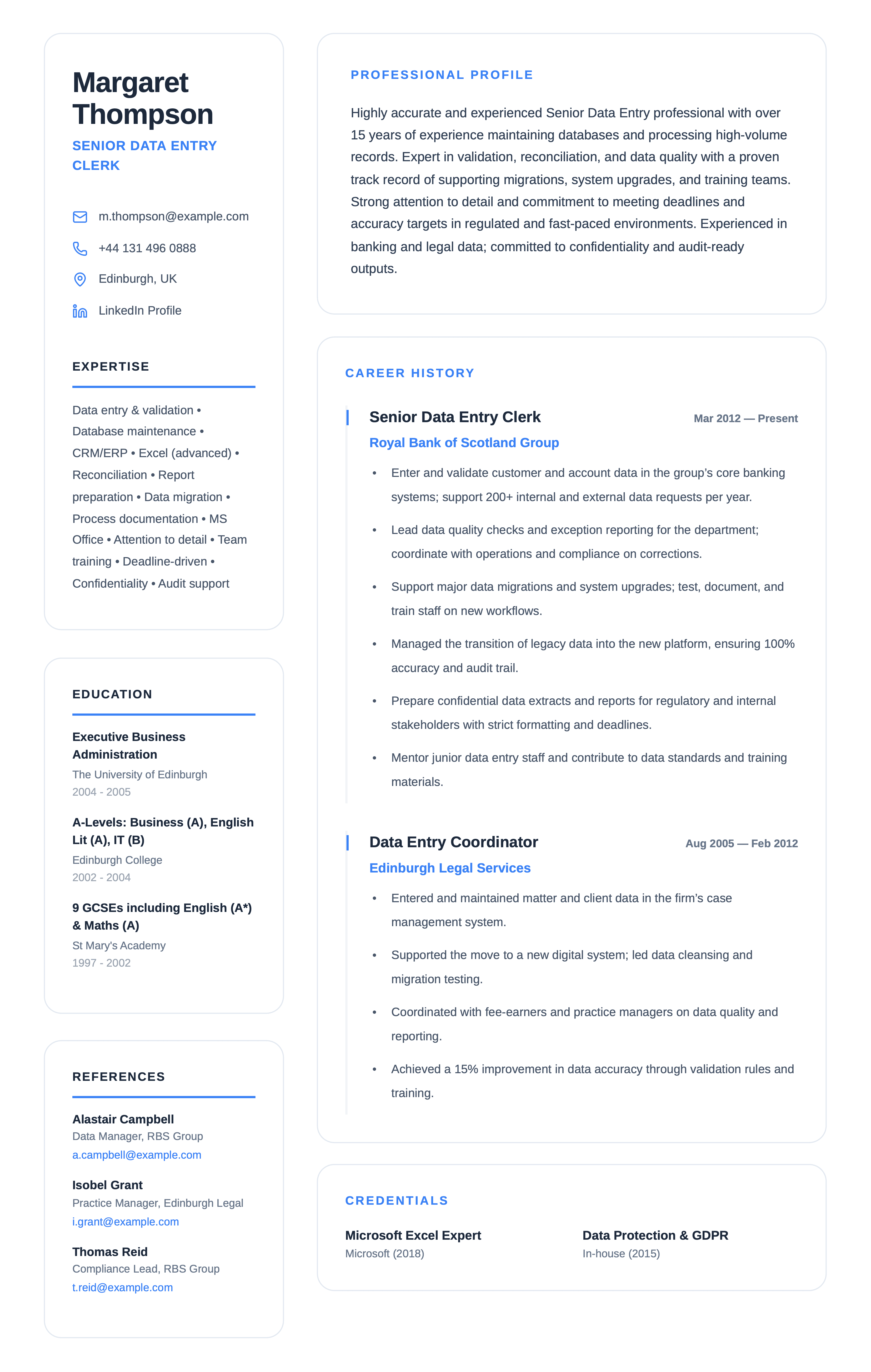
How to Structure a Data Entry CV
A strong data entry CV proves you can capture information quickly without sacrificing accuracy, and that you understand validation, filing and confidentiality. Hiring managers often skim first, then read in more detail if the opening sections look relevant to their systems and volumes.
Structure your CV so your typing speed (where you have a figure), software experience and most recent role are easy to find.
What recruiters scan first
Typically: contact details and job title, professional summary, current or most recent role, then tools (Excel, CRM, databases) and any certifications. If those sections line up with the job description, you are more likely to get a full read.
A structure that works:
- Name and target role at the top (for example Data Entry Clerk or Database Administrator)
- Professional summary tailored to the role (keep it short; see below)
- Core skills (software, data quality, speed and attention to detail)
- Work experience in reverse date order, most recent first
- Education and relevant qualifications (NVQ, ECDL, GDPR or sector training)
- Optional: projects, temp peaks, or quality initiatives; interests only if they add something credible
Format and length
Aim for one or two pages: enough space for evidence, short enough to skim. Use clear section headings, bullet points for roles, and a simple professional font. Lead with facts recruiters search for (CRM names, databases, keystrokes per hour or lines per hour if you have them, and regulated-sector experience where relevant).
Reverse chronological vs skills-first
Most data entry applicants should use reverse chronological work history. A skills-first layout can work if you are changing sector, returning after a break, or applying for a first role, as long as you still prove impact with numbers and tools.
Contact Details
Put your full name, professional email and phone number at the top. A clear job title line (for example "Data Entry Clerk" or "Records Administrator") helps recruiters immediately see fit.
Town or city is enough for location; you do not need your full address at application stage. LinkedIn is useful if your profile matches your CV.
What to include
- Full name and how you want to be addressed professionally
- Professional email address
- Mobile number
- Town or city (optional)
- LinkedIn URL (optional)
What to leave out
- Full home address
- Date of birth
- Marital status
- NI number on the CV (unless specifically requested)
Professional Summary
Use this section to state your years of experience, environment (office, hybrid, contact centre, legal or healthcare records) and the type of role you want next. Tie in phrases from the job advert where they are accurate: for example CRM, bulk upload, validation or GDPR.
Keep it factual and specific, and roughly within about four to six lines (many guides suggest under 100 words). Generic lines like "hard-working team player" waste space that could mention software, error rates or volume instead.
In the examples below, the highlights follow the same idea each time: experience and setting (years, sector or study stage), tools and methods (Excel, CRM, databases, validation), and impact and reliability (throughput, quality, deadlines).
Data entry specialist with 6+ years in high-volume CRM and order processing. Strong in Excel, duplicate checks and hitting daily targets with under 0.5% rework.
Records administrator with 4 years indexing and digitising case files. Experienced in metadata tagging, redaction workflows and confidentiality under firm policies.
Recent school leaver with GCSE English and Maths at grade 5+ and ECDL in spreadsheets. Comfortable with Microsoft 365, online forms and fast, accurate keyboard work under supervision.
Skills
Split technical tools from data-quality habits if it helps readability. Match language to the role: a healthcare records role needs different emphasis than e-commerce order entry.
Aim for a tight mix of hard skills (software, databases, validation) and a few soft skills employers expect, such as concentration, integrity and clear written communication. Around 8 to 12 well-chosen lines often works well for humans and keyword screening.
Only list what you can discuss at interview; overstating software experience is easy to test.
Professional Experience
List roles in reverse chronological order with employer, job title and dates. Use bullets for responsibilities and outcomes; numbers beat adjectives.
A clear structure for each role
For each job, recruiters often read in three passes. A layout that matches that helps:
- Context: one line on employer type, your title and what data or systems you handled
- Responsibilities: bullet points for capture, validation, filing or customer-facing entry
- Achievements: two or three bullets with metrics (records per day, error reduction, backlog cleared)
How to write strong experience bullets
Good pattern: what you did + scope + measurable outcome. For example: "Processed 400+ customer records daily into Salesforce with same-day validation and weekly quality scores above team average."
Useful details include system names, team size, shift patterns, typing metrics (WPM or KPH) and any training or audit you supported.
- Volume or throughput where you can state it honestly
- Accuracy or rework metrics if your employer tracked them
- Deadlines or backlog reduction with a number
- Confidentiality or compliance context (without breaking NDAs)
Cleared a 3-week backlog of 1,200 scanned forms by prioritising urgent cases and introducing a shared checklist, cutting average turnaround from 6 days to 2.
Did data entry and filing as required.
Education & Qualifications
Include your school or college qualifications, vocational courses and any short certifications that matter for data entry (ECDL, GDPR essentials, sector-specific training).
For GCSEs or equivalent, a single summary line (grades and core subjects) is usually enough unless the employer asks for detail.
What to include based on your path
First-job applicants should foreground IT literacy and any work experience or volunteering with records. Career changers can highlight transferable admin or customer service roles. Senior applicants should show progression into quality, training or systems ownership where relevant.
Certifications that can strengthen your CV
Data entry roles do not always require formal certifications, but they can help you stand out, especially for competitive or regulated roles. Good examples include Microsoft Office Specialist (Excel), ECDL/ICDL, sector-specific compliance certificates, and internal data quality training.
BTEC Level 3 Business Administration
City College, 2022 - 2024
ECDL (spreadsheets & word processing)
2023
In-house training
GDPR refreshers, CRM super-user course (examples as relevant)
Projects & Additional Information
Use this for migration clean-up, template redesigns, or helping roll out a new CRM field set—work that does not sit neatly under one job title.
Optional: volunteering with charity admin, temp peaks you led, or relevant memberships.
Career achievements and awards
Short listings work well: employee of the month for accuracy, recognition for clearing a backlog, or leading a buddy shift for new starters. Pair each with a date or context so it reads as evidence, not padding.
Make sure your CV passes ATS checks
Many employers screen CVs electronically before a human reads them. To improve your chances:
- Use standard section headings recruiters expect
- Mirror key terms from the job description where truthful
- Use a simple single-column layout that ATS software can parse cleanly
- Avoid tables and text boxes that parsers struggle with
- Export to PDF only if the employer allows it; otherwise use Word if asked
- Keep layout simple and legible
Before you send: align the wording with the advert, proofread numbers and dates, and add a cover letter when the role asks for one or you need to explain a career move. A second pair of eyes often catches slips that undermine an otherwise careful data entry CV.
References
It is normal to write "available on request" unless the advert asks for referees up front. Line managers or agency contacts are stronger than peers where possible.
What to include for each referee
- - Full name and title
- - Organisation
- - Email and/or phone
- - How they know your work (e.g. team leader, agency consultant)
Ready for your next data entry role?
Choose a data entry template and start editing.
Browse Data Entry CV Templates